What To Pack For Norway (And What Customs Will Not Let In)
Half of packing for Norway is fabric choice, and the other half is knowing what the customs desk at Gardermoen will take off you.
 Written with Lars Hansen, Norway Tour Packages Specialist & Experience Guide
Short answer
Pack a wool or synthetic base, insulation, a waterproof shell and footwear suited to the activity. Use only chargers rated for Norway’s 230 volts and the correct plug adapter. Check current customs allowances and food or medicine restrictions before packing.
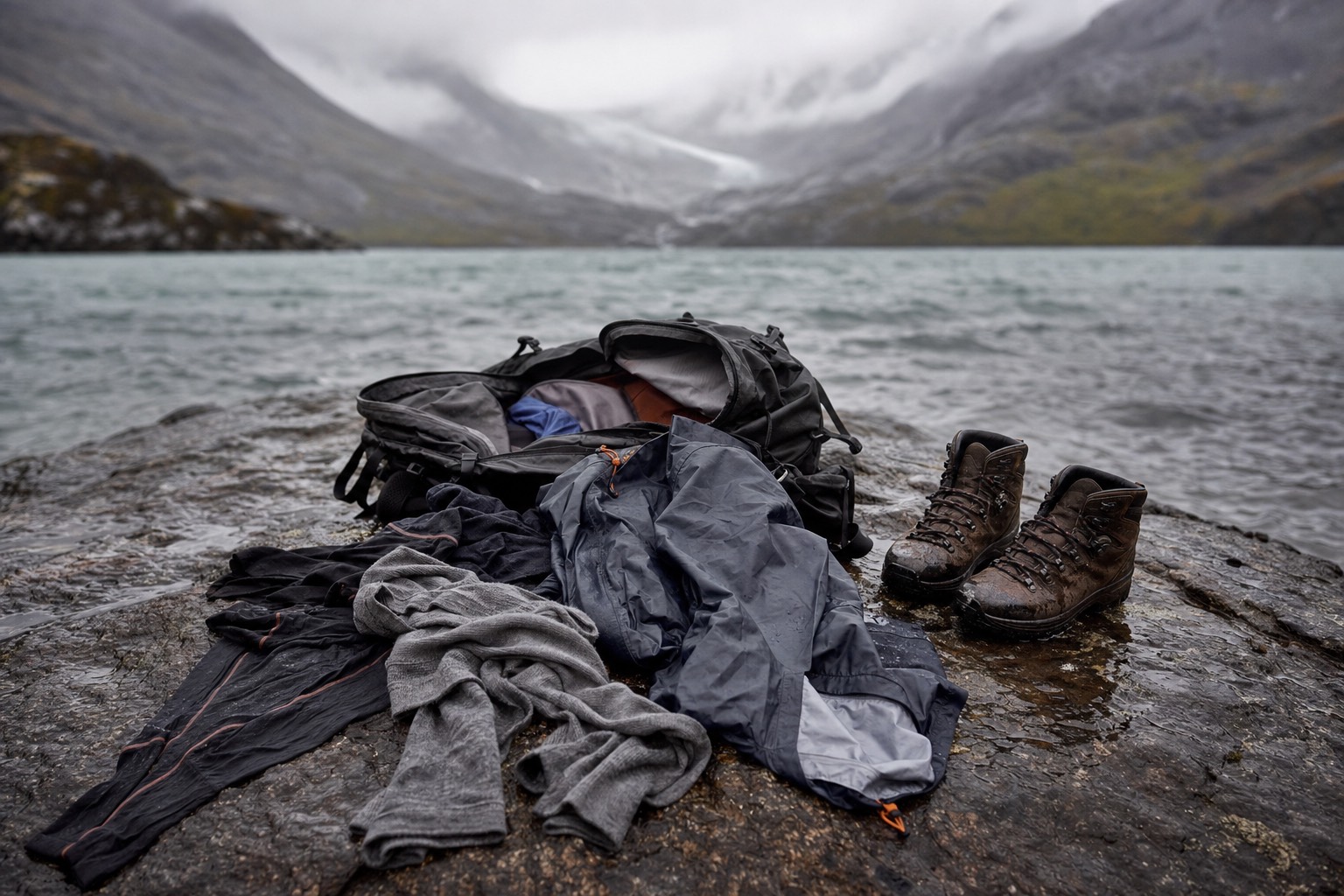
Norwegians have a phrase for this, and it appears on hiking signs, in school newsletters and in the mouth of every guide who has watched a visitor arrive in a cotton hoodie: there is no bad weather, only bad clothing. It sounds smug until you spend an afternoon on the coast in horizontal drizzle at eight degrees and understand it as engineering advice rather than a proverb. What you wear in Norway determines whether the country is enjoyable or merely endured.
Pack for the actual activity and check its inclusions. Supplied ski equipment or warm drinks do not mean all clothing is provided.
Booking choice: For a winter Tromsø introduction, the ski lesson supplies skis, boots and poles. Fjord cruises and aurora evenings need different clothing choices. Explore Tromsø Beginner Ski Lesson
What Layering System Actually Works Here?
Three layers, none of them cotton. A merino or synthetic base against the skin to move sweat outward, a fleece or light down mid layer for warmth, and a fully waterproof, windproof shell on top. The shell matters more than the insulation on the west coast, where the enemy is wet rather than cold.
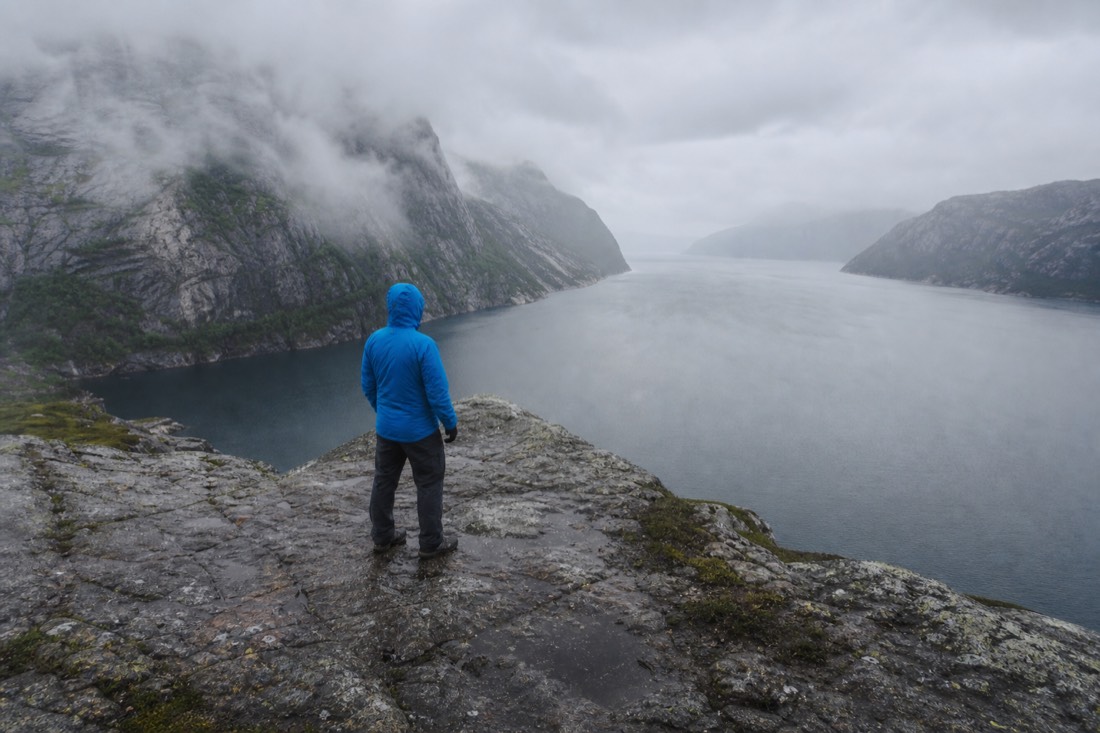
The system works because each layer does one job and you remove layers as you climb rather than sweating through everything. Wet clothing against skin in wind is how people get genuinely cold at temperatures that sound harmless. Wool is the Norwegian default for a reason: it keeps insulating when damp, which synthetic base layers do less well and cotton does not do at all.
For the shell, look for taped seams and a hood that fits over a hat. Waterproof trousers are not optional on the coast; they are the single item visitors most regret leaving behind. Visit Norway and the forecast service yr.no, run by the meteorological institute, both assume you own a shell, which tells you something about the baseline.
| Layer | What works | What to avoid | Why |
|---|---|---|---|
| Base | Merino wool, synthetic long sleeve | Cotton t-shirts | Wool insulates when damp, cotton chills you |
| Mid | Fleece, light down or synthetic puffy | Heavy single sweater | Adjustable warmth, packs small |
| Shell | Taped-seam waterproof jacket and trousers | Water-resistant softshell | Coastal rain is sustained, not showers |
| Feet | Wool socks, waterproof boots | Trainers, thin cotton socks | Wet feet end walks early |
| Extremities | Hat, gloves, buff | Nothing at all | Wind chill on boats and viewpoints |
What Changes Between A Summer And A Winter List?
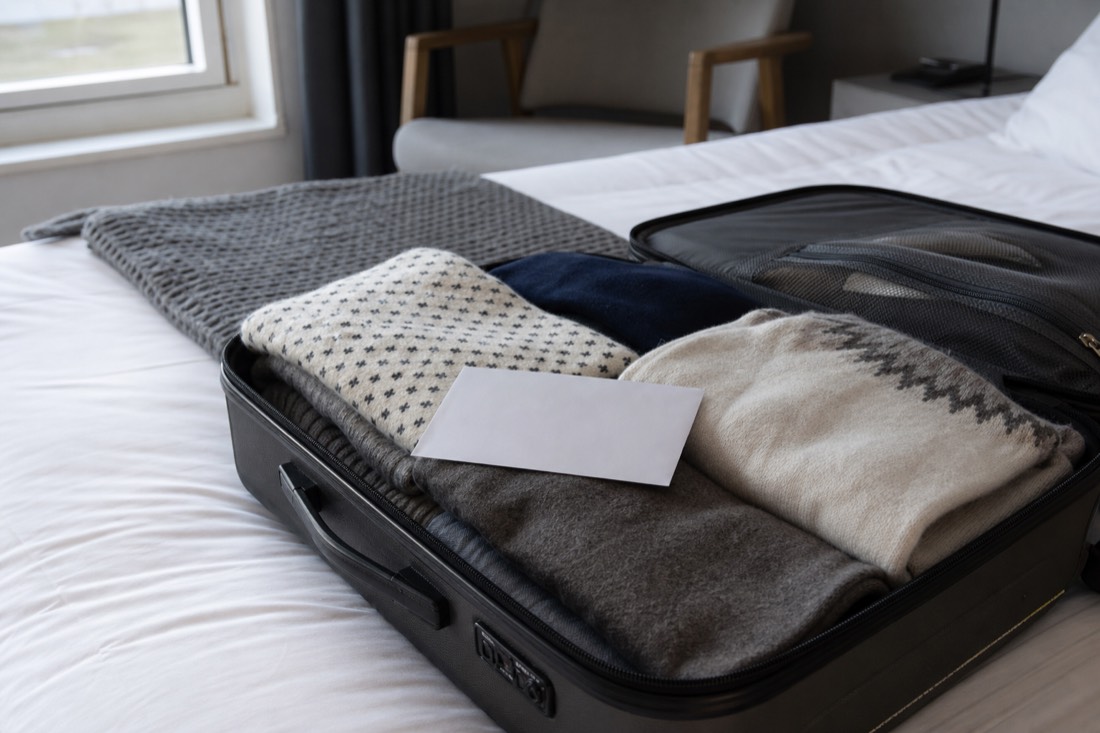
Less than visitors expect. Summer swaps the heavy insulation for a light mid layer but keeps the same shell, boots and wool socks. Winter adds thermal trousers, insulated boots, a proper hat and gloves, plus traction spikes for icy pavements in Oslo, Bergen and Tromsø.
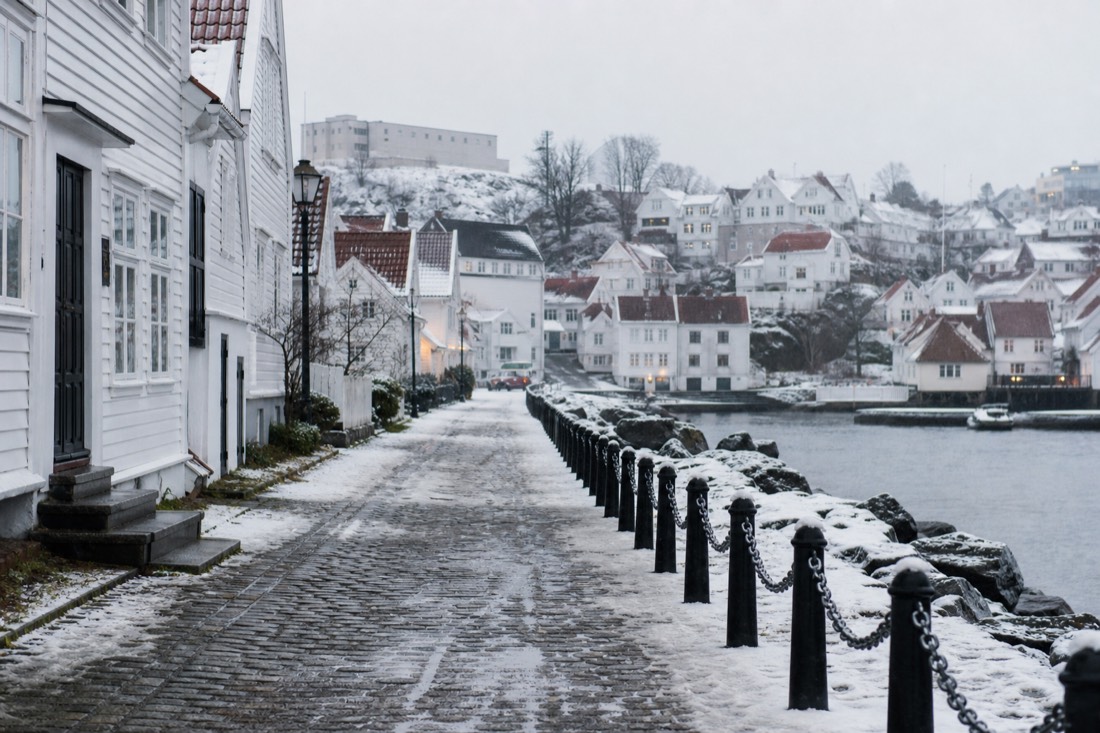
The item most people forget in winter is footwear traction. City pavements in February are polished ice under a dusting of snow, and slip-on spikes cost very little in any Norwegian supermarket. The item most people over-pack in summer is warm clothing generally: a Norwegian July on the coast is mild, and the trouble is rain, not temperature.
Shoulder season, roughly April to May and September to October, is the hardest to pack for because it can deliver both. That is also when the light is best. Our winter Norway guide covers the cold-months version in more detail, and there is a separate answer to the perennial question of how formally Norwegians actually dress in our notes on what to wear in Norway.
| Season | Add | Leave out | Watch for |
|---|---|---|---|
| Summer, June to August | Light mid layer, sun hat, midge repellent inland | Heavy insulation, thermal trousers | Sustained rain rather than cold |
| Shoulder, April to May and September to October | Both a warm mid layer and a light one | Extreme cold gear | Fast weather swings in a single day |
| Winter, November to March | Thermal trousers, insulated boots, hat, gloves, spikes | Anything cotton | Ice underfoot in towns, short daylight |
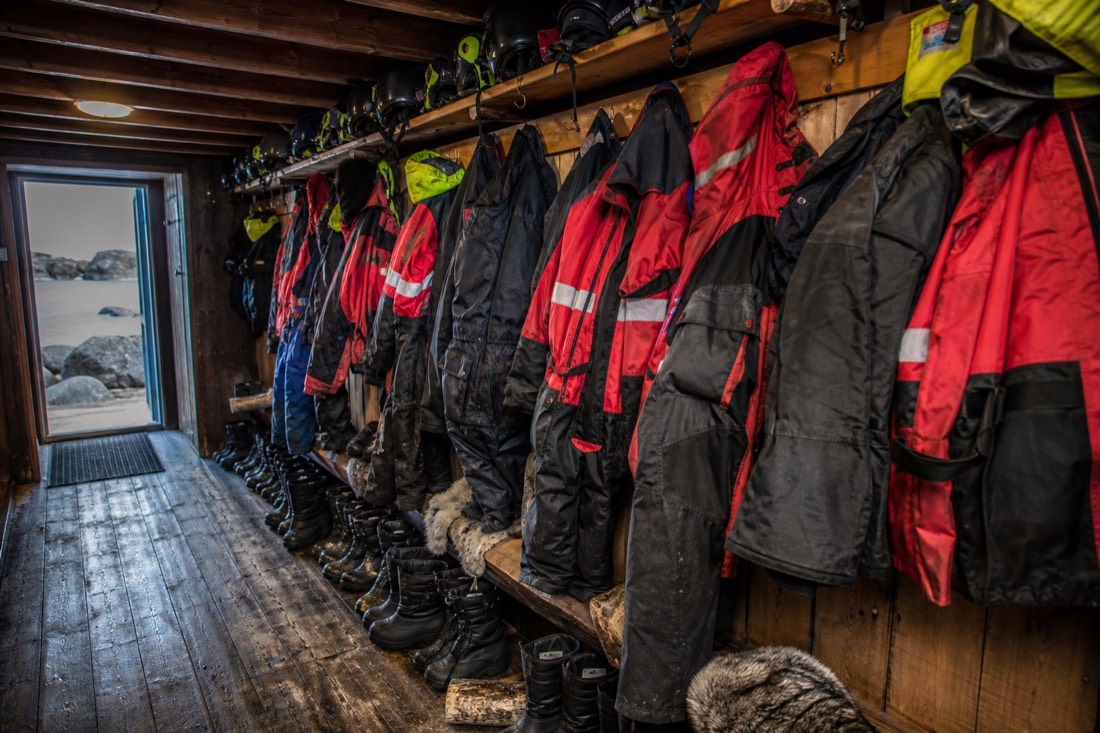
| Arctic winter tours | Little, if the operator supplies suits | Bulky snowsuit purchases | Check the inclusions before buying gear |
Can You Actually Wear Jeans In Norway?
In cities, yes. Oslo, Bergen and Trondheim are full of people in jeans and Norwegians dress casually. For anything outdoors, no. Denim is cotton, it soaks up rain, it takes hours to dry and it pulls heat out of your legs once wet, which is exactly the failure mode Norwegian weather specialises in.
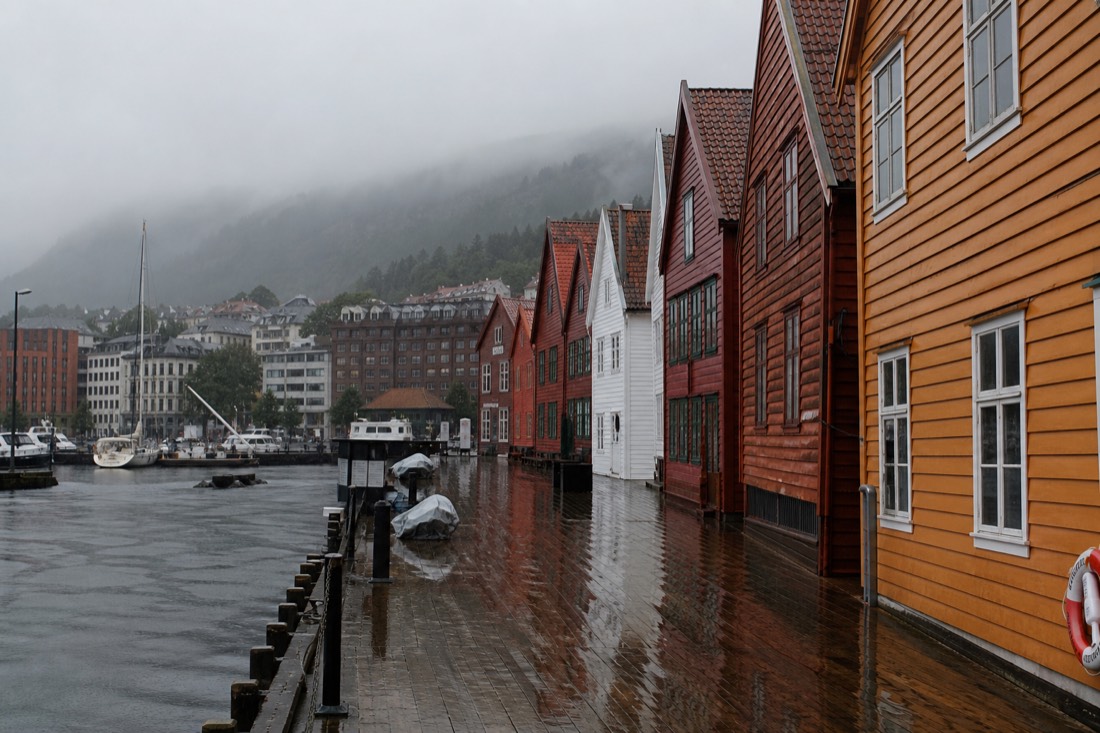
This is the most searched packing question about Norway and the answer is genuinely split by activity rather than by taste. Nobody will look at you oddly for wearing jeans to dinner in Oslo, and the dress code in most Norwegian restaurants is closer to smart-casual than formal. But a fjord boat deck, a hike to a viewpoint, or a rainy afternoon in Bergen calls for quick-drying trousers.
One pair of jeans for city evenings, one pair of hiking or travel trousers for everything else, is the split that works. Bergen alone records something like 200 to 240 rainy days a year, so the odds of testing this are high, as our look at the rainiest month in Norway sets out.
What Plug Adapter And Voltage Does Norway Use?
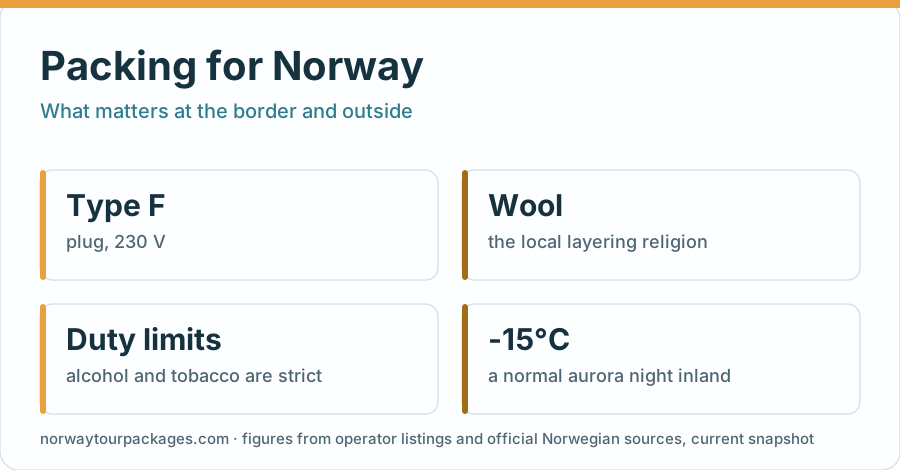
Norway runs 230 volts at 50 hertz with Type C and Type F sockets, the standard round two-pin European fitting. US and UK visitors need an adapter. Modern phone and laptop chargers handle 230 volts automatically, but US hair tools and shavers often do not and will need a converter, not just an adapter.
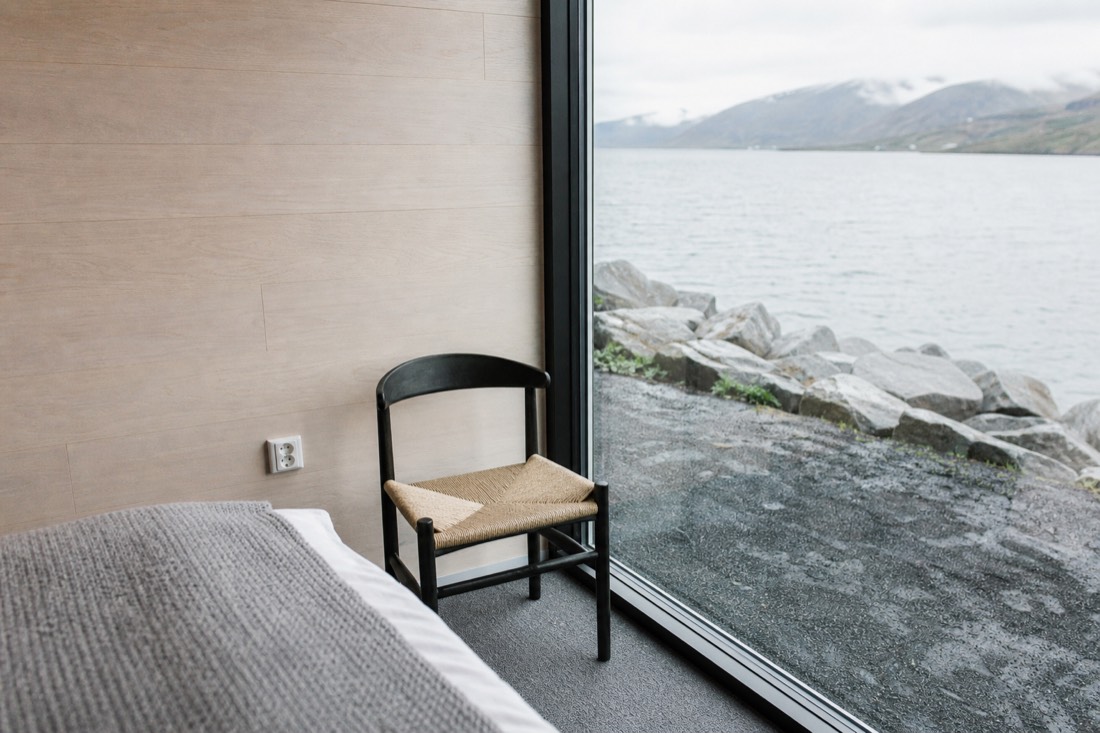
Check the small print on your charger brick. If it reads 100 to 240 volts, you only need the physical adapter. If it says 120 volts only, plugging it in through an adapter is how you destroy it. Bring two adapters rather than one, because hotel rooms in older Norwegian buildings can be short of accessible sockets, and any power strip must itself be rated for Norway’s 230-volt supply; a plug adapter does not convert voltage.
Cold also matters for power. Phone batteries drain fast in winter, which is a real problem if you are using the phone for tickets and navigation, so a power bank kept in an inside pocket is worth the weight.
What Can You Not Bring Into Norway?
Norway sits outside the EU customs union, so its limits are stricter than an EU border. Duty free allows 1 litre of spirits above 22 percent, 1.5 litres of wine, 2 litres of beer, and 200 cigarettes or 250 grams of tobacco for tourists resident outside Norway. Above that you must declare, and there are hard caps.
This catches people because alcohol is so expensive in Norway that arriving passengers reasonably want to bring their own. You can, up to a point. Beyond the duty-free quota, Norwegian Customs lets you declare and pay duty on larger amounts through a simplified declaration, up to 27 litres of beer or wine, 4 litres of spirits, 400 cigarettes and 500 grams of tobacco. Past those ceilings you need a full customs process.
Meat and dairy from outside the EEA are restricted, live plants and soil are controlled, and you can swap alcohol categories within the quota to a degree. Cash above 25,000 NOK must be declared. Nothing here is unusual, but the alcohol numbers are lower than most visitors assume, and the green channel is not a suggestion.
| Category | Duty free allowance | Declarable maximum |
|---|---|---|
| Spirits over 22 percent | 1 litre | 4 litres |
| Wine, 2.5 to 22 percent | 1.5 litres | 27 litres of beer and wine combined |
| Beer | 2 litres | Counted within the 27 litre ceiling |
| Cigarettes, tourist resident outside Norway | 200 | 400 |
| Other tobacco, tourist resident outside Norway | 250 g | 500 g |
What Is Restricted Beyond Alcohol And Tobacco?
Food is the category that catches tourists. Meat and dairy from most countries outside the EU/EEA are generally prohibited, with specific origin, infant-food and medical-food exceptions. Potatoes have separate plant-health restrictions. Drones, prescription medication and large amounts of cash each have their own rules, and none of them are covered by the duty-free allowances above.
Alcohol gets all the attention because it is expensive here, but it is rarely what actually goes wrong at the border. The restriction that catches ordinary travellers is food: sandwiches, cheese and cured meat brought from home from outside the EEA are not permitted, and that is a rule people break without ever thinking of it as smuggling.
| Item | The rule |
|---|---|
| Meat, dairy, potatoes from outside the EEA | Not permitted |
| Live plants and soil | Controlled; check before travelling |
| Cash | Amounts above the reporting threshold must be declared |
| Drones | Permitted with rules, but restricted near airports and some sites |
| Medication | Bring the prescription; some common drugs are controlled here |
The medication line is the one worth acting on before you fly. Some drugs sold over the counter elsewhere are prescription-only or controlled in Norway, so carry the original packaging and required documentation, and check whether the medicine and quantity are permitted. Drones are legal but restricted near airports and some protected sites, which covers a surprising amount of the scenery people most want to film.
Which Common Packing Choices Fail In Norwegian Conditions?
Umbrellas fail in coastal wind, cotton holds cold water against your skin, and denim stays wet all day once soaked. None of these are bad items in themselves; they are simply the wrong materials for a wet, windy maritime climate.
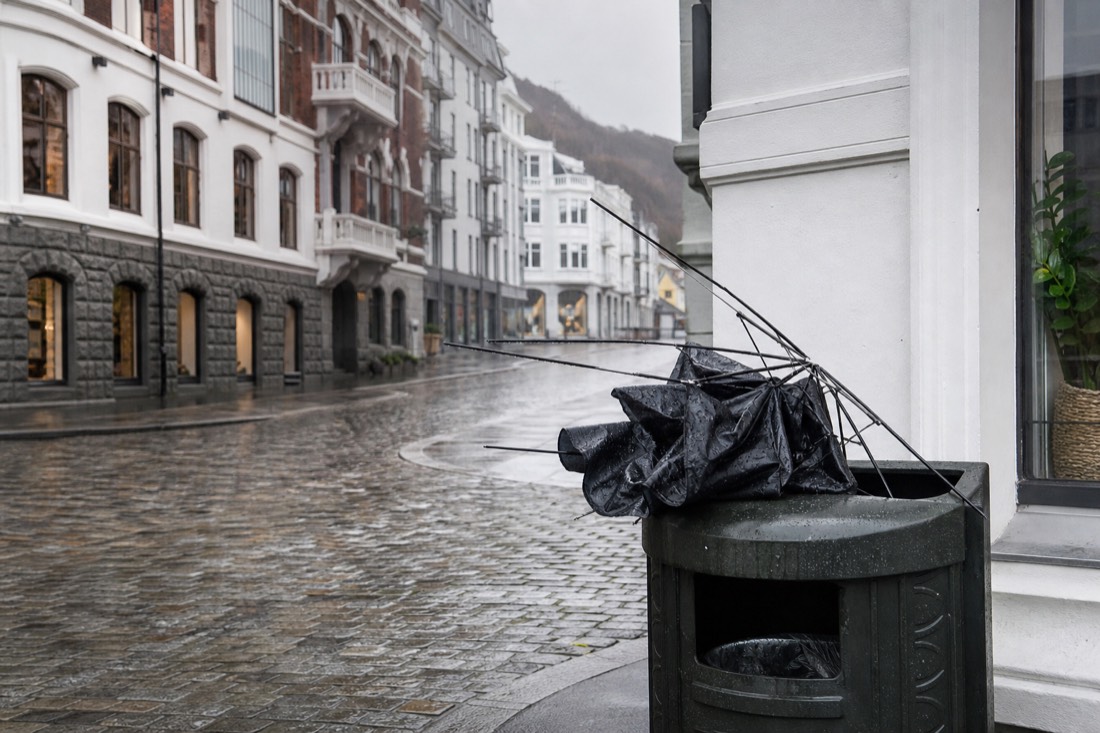
The packing mistake here is not bringing too little, it is bringing the wrong material. Bergen records roughly 200 to 240 rainy days a year, so waterproofing is not an optional extra, and wind is what turns rain into a problem. The local response is uniform to the point of being a national costume: wool next to skin, a windproof shell on top, and no expectation that anyone dresses up.
| Leave behind | Bring instead | Why |
|---|---|---|
| Umbrella | Hooded waterproof shell | Coastal wind destroys umbrellas |
| Cotton base layers | Merino wool | Wool insulates when damp, cotton does not |
| Jeans only | Quick-dry trousers plus jeans for cities | Wet denim stays wet all day |
| Formal outfit | One smart-casual layer | Norwegian restaurants are relaxed |
| Bottled water | A refillable bottle | Tap water is excellent and free everywhere |
| Heavy tripod, unless shooting aurora | Compact travel tripod | Weight matters on trails and trains |
The one genuine exception is winter aurora photography, where a real tripod earns its place. Everything else on the left column is weight you will resent carrying up to Preikestolen.
What Does Lars See People Get Wrong At The Door?
Footwear, almost every time. Visitors arrive with clothing that handles the cold and shoes that cannot handle wet rock, icy pavement or a boat deck. The jacket is rarely the problem; the soles usually are.
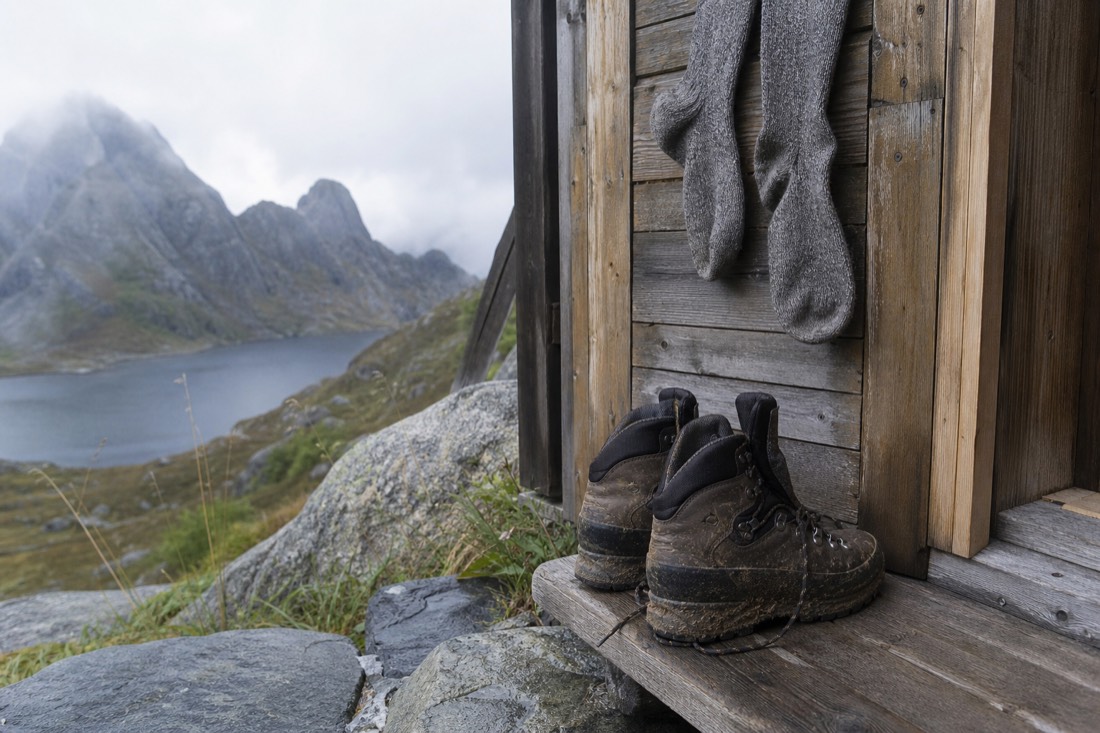
Guiding visitors since 2015 has given Lars a reliable predictor of who will have a difficult day, and it is visible before anyone leaves the meeting point. Norwegian conditions are less about temperature than about traction and damp, and shoes are where those two meet.
| Common mistake | What happens | The fix |
|---|---|---|
| Fashion trainers | Soaked within an hour, no grip on wet rock | Waterproof boots with a real sole |
| Brand-new boots | Blisters on day two of walking | Break them in before you fly |
| No spare socks | One wet crossing ruins the day | Two wool pairs in the day bag |
| Cotton socks | Cold feet even inside good boots | Wool, always |
| No grip for ice | Falls on town pavements in winter | Clip-on spikes; cheap and light |
| Camera but no gloves that work with it | Cold hands or no photos | Thin liner gloves under mittens |
The last line is a small thing that decides whether people actually photograph the aurora or stand with their hands in their pockets watching it.
What Should Go In The Day Bag Rather Than The Suitcase?
A waterproof shell, a wool layer, spare socks, a refillable bottle, a power bank and any medication. Norwegian days change fast and often involve boats, so the bag you carry matters more than the one in the hotel.
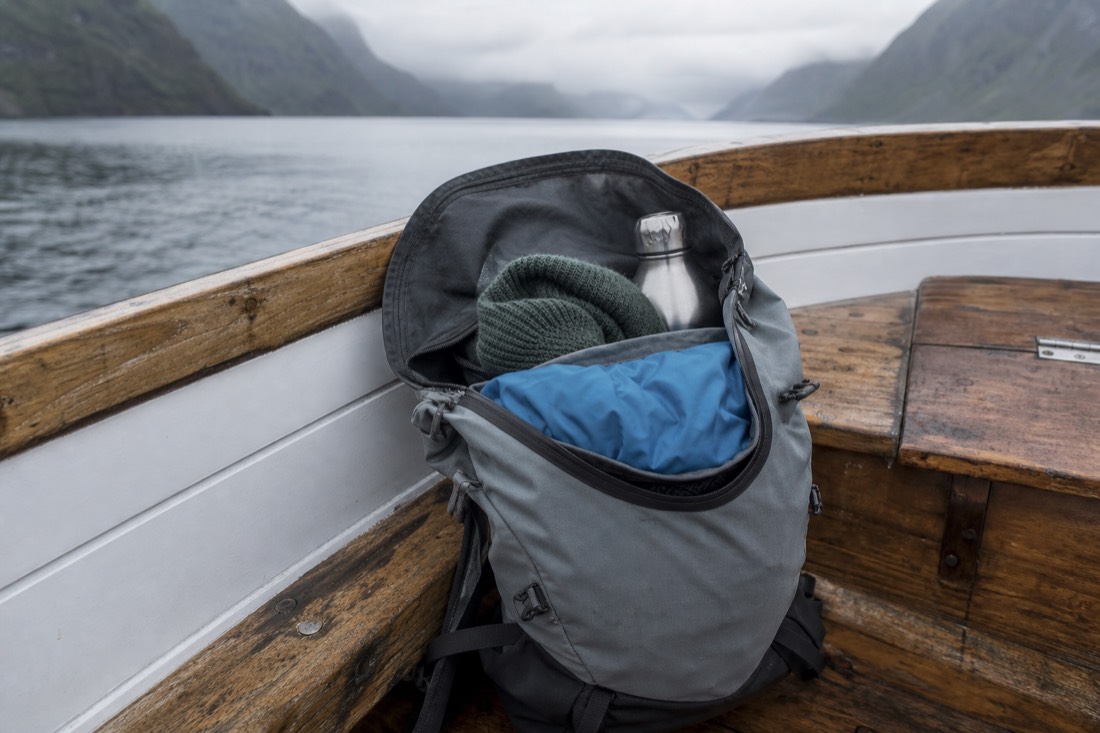
The suitcase question is largely solved by wool and a shell. The day bag is where trips get uncomfortable, because the weather that arrives at eleven o'clock is rarely the weather you dressed for at eight.
| Item | Why it lives in the day bag |
|---|---|
| Waterproof shell | Rain arrives without much warning, especially on the west coast |
| Extra wool layer | Fjord and whale boats are far colder than the shore |
| Spare wool socks | One wet crossing otherwise ruins the rest of the day |
| Refillable bottle | Tap water is excellent and free; bottled water is wasted money |
| Power bank | Cold drains phone batteries fast, and your ticket is on your phone |
| Medication and prescription | Some common drugs are controlled in Norway |
| Thin liner gloves | Lets you use a camera or phone without bare hands |
The power bank line is more practical than it sounds. Cold weather flattens a phone battery quickly, and in a country where tickets, timetables and boarding passes all live on the screen, a dead phone is a genuine problem rather than an inconvenience.
How Does The Packing List Change Between The Fjords And The Arctic?
The fjords demand waterproofing above all: rain, spray and damp mild air. The Arctic demands insulation and wind protection in dry cold. A trip covering both needs the shell from one list and the wool weight from the other, which is why layering wins.
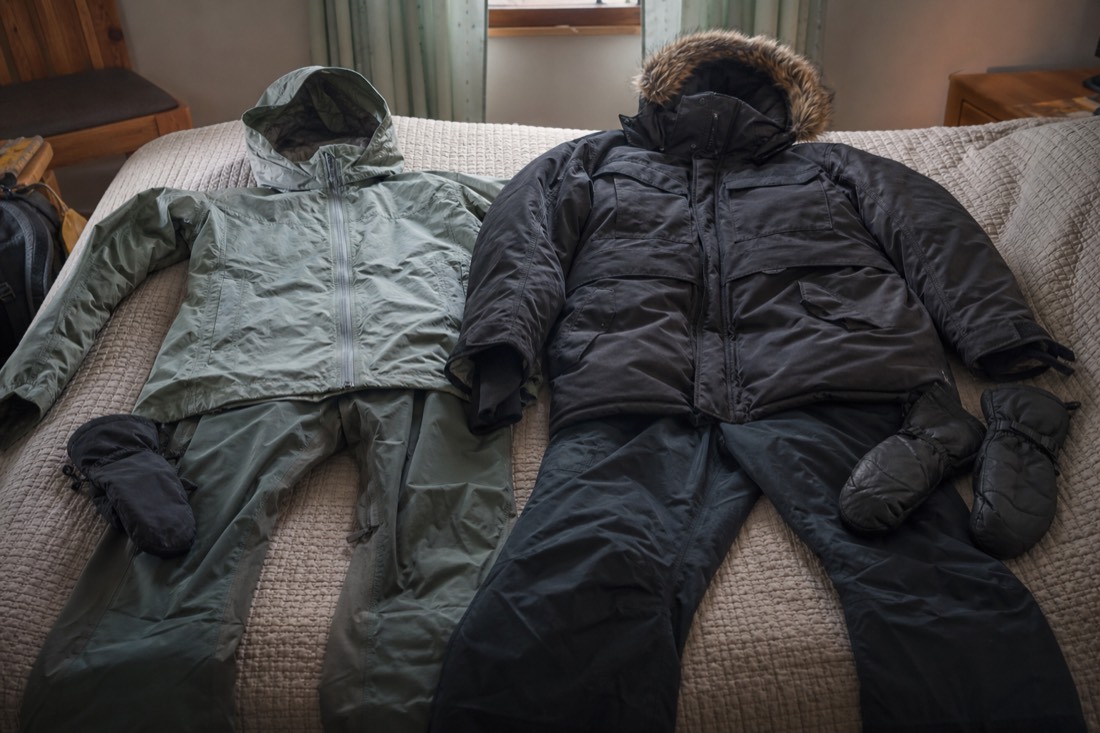
Travellers doing Bergen and Tromsø in the same week are effectively packing for two climates. The good news is the systems overlap almost entirely; only the weight of the mid-layer really changes.
| Layer | Fjords and west coast | Arctic in winter |
|---|---|---|
| Base | Lightweight merino | Midweight merino, long sleeve and legs |
| Mid | Light fleece | Thicker fleece or down sweater |
| Shell | Fully waterproof, hooded, essential | Windproof, insulated; operators often supply a suit |
| Legs | Quick-dry trousers | Insulated or lined trousers |
| Feet | Waterproof boots, wool socks | Insulated boots, wool socks, spikes for ice |
| Hands and head | Light beanie, packable gloves | Mittens over liners, hat covering ears |
One more difference is worth planning for: laundry. A week that crosses both climates doubles the base layers you get through, and Norwegian hotels rarely have cheap self-service laundry. Merino is the practical answer because it can be worn several days without complaint, which is the real reason experienced travellers here own so much of it rather than any performance claim on the label.
The shell row carries the biggest difference. On the west coast the shell is your primary defence and must be genuinely waterproof rather than showerproof; in the Arctic it also needs to protect against wind. Check whether your exact tour supplies a thermal suit before relying on one.
What Can You Leave At Home And Get From The Operator?
Winter tour gear, mostly. Equipment varies by tour. Aurora clothing inclusions vary by option; the ski lessons include ski equipment, not all winter clothing. Arrange each missing layer before the meeting time.
Related planning: northern lights tours page.
Two last additions that earn their space: a refillable water bottle, because Norwegian tap water is genuinely excellent and bottled water is priced like a mistake, and a small dry bag for the phone and camera on open fjord boats. Everything else you forget can be bought in a Norwegian outdoor shop, at Norwegian prices, which is its own argument for packing properly the first time.
Norwegian Customs distinguishes visiting tourists’ tobacco allowance from the smaller arrival-airport duty-free sales limit. Check the age, residence and import conditions before travelling.
The Norwegian Food Safety Authority lists personal-food import exceptions. Check the origin, product and quantity rather than assuming all packaged food is exempt.
Choose Your Norway Experience
Cross-Country Ski Lesson for Beginners in Tromso. Learn cross-country skiing with an instructor, ski equipment and transport from central Tromsø. Have a date in mind? Check it before arranging the rest of your Norway trip.
3 hours. Ages 12+. Meet at Tromsø Outdoor, Fredrik Langes gate 14. Send your EU shoe size when booking. Winter clothing and hotel pickup are not included; inadequate snow may mean an alternative or refund.
Choose a date to see scheduled departures. Final availability and price are confirmed on Viator.
No verified experience fits those requirements. Adjust your choices, or keep the independent plan described above.
Compare Options And Fit Your Plans
General recommendation until you choose. Choose the city where the activity starts, not your arrival airport. Month filters describe the experience’s season, not confirmed departures. Allow travel to the meeting point as well as the listed duration. Confirm your exact option and access needs when booking.
- Tromsø Northern Lights Chase We Go Where The Lights Appear: 9 hours. Follow a guide and photographer away from Tromsø in search of clearer northern-lights skies. Choose the English Classic coach option shown by this schedule. Six to nine hours; up to 45 guests, toilet, photographer and hot drinks. Arrive 30 minutes before departure at your ticket meeting point. Thermal suits, boots and meals depend on the option; confirm before packing. Aurora sightings are not guaranteed.
- Mostraumen Fjord Cruise : Operated & Guided by Locals: 3 hours 30 minutes. Cruise from Bergen into Osterfjord and the narrow Mostraumen passage. Meet at the pier between Strandkaien Terminal and Mathallen. English audio commentary. Winter ice can require an alternative route.
- Tromsø Cross-Country Ski Adventure: 2 hours 30 minutes. Try cross-country skiing with a guide, skis, boots and poles at Charlottenlund. Ages 8+. Meet at Charlottenlund activity-park parking area. Hotel pickup is not included. Bring winter clothing and confirm snow conditions for your date.