Tap Water, Cards And Tipping In Norway: The Money Answers
Can you drink tap water in Norway, does Apple Pay work everywhere, and how much should you tip? The practical money answers for a Norway trip, with real figures.
 By Lars Hansen, Norway Tour Packages Specialist & Experience Guide
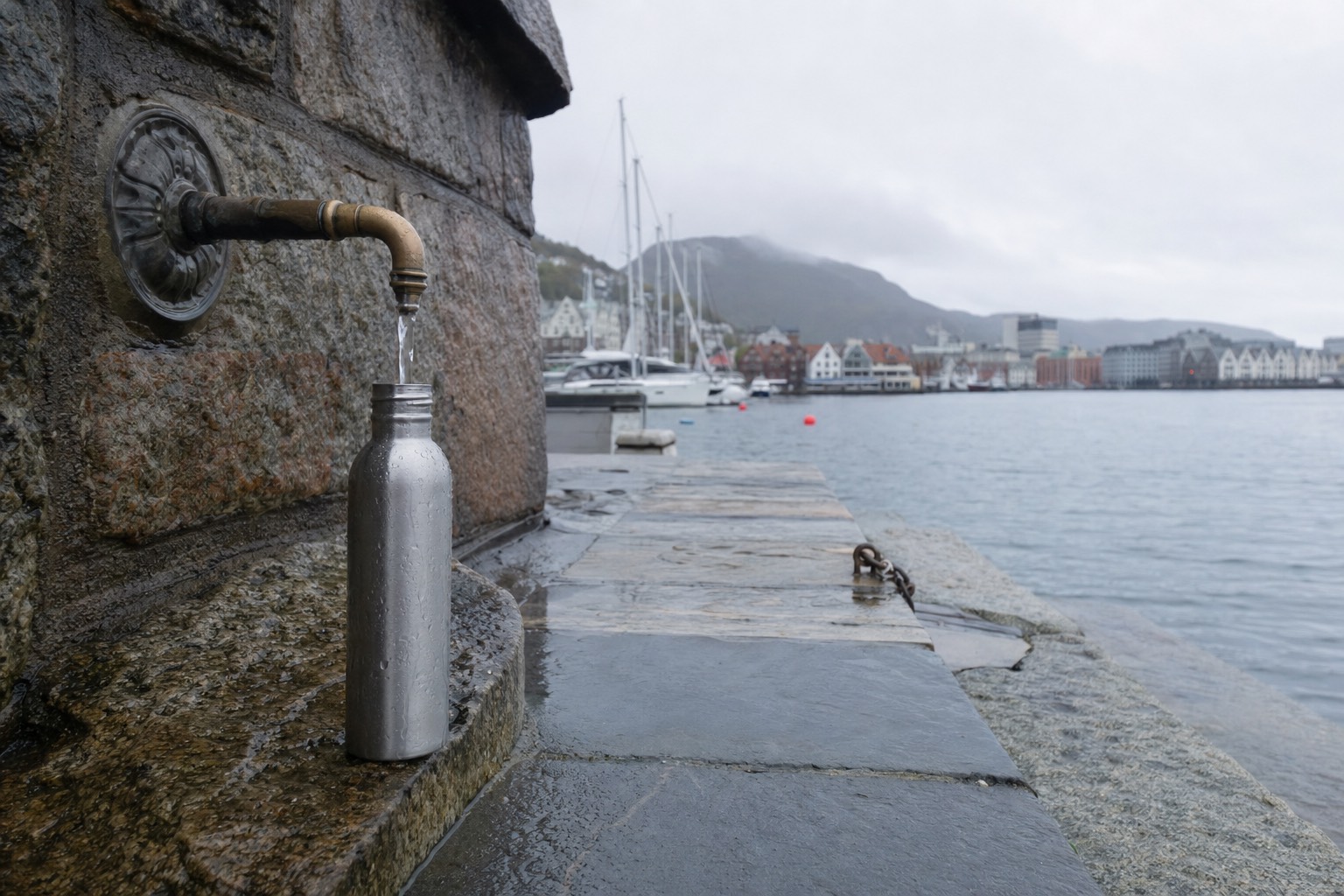
A café in Oslo will hand you a glass of tap water without being asked, and it will be better than most of what you can buy in a bottle. That single habit saves a visitor a surprising amount over a week, and it sets the tone for how money works here. Norway is expensive at the till and unusually frictionless everywhere else: no currency hunting, no tipping arithmetic at the end of dinner, no scramble for small notes at a kiosk. Three questions come up more than any others, and they have short, verifiable answers.
Sort out everyday payments first, then compare a guided tasting outing with your own food budget.
Booking choice: The Oslo walk includes several Norwegian tastings; Bergen’s three-hour food walk includes a small lunch. Compare the whole outing with your own food budget. Explore Oslo Food Tasting Walk
Can You Drink The Tap Water In Norway?
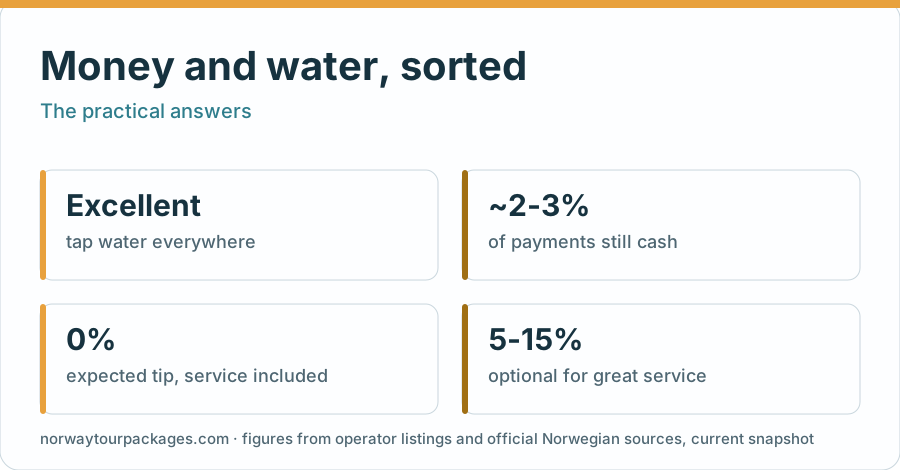
Mains drinking water is generally safe; follow any local boil-water notice or non-potable sign, including at fountains and huts. Norway scores 99.9 on the EPI safe drinking water index, among the highest results anywhere. Buying bottled water is a straight waste of money, so carry a refillable bottle and use a designated drinking-water tap.
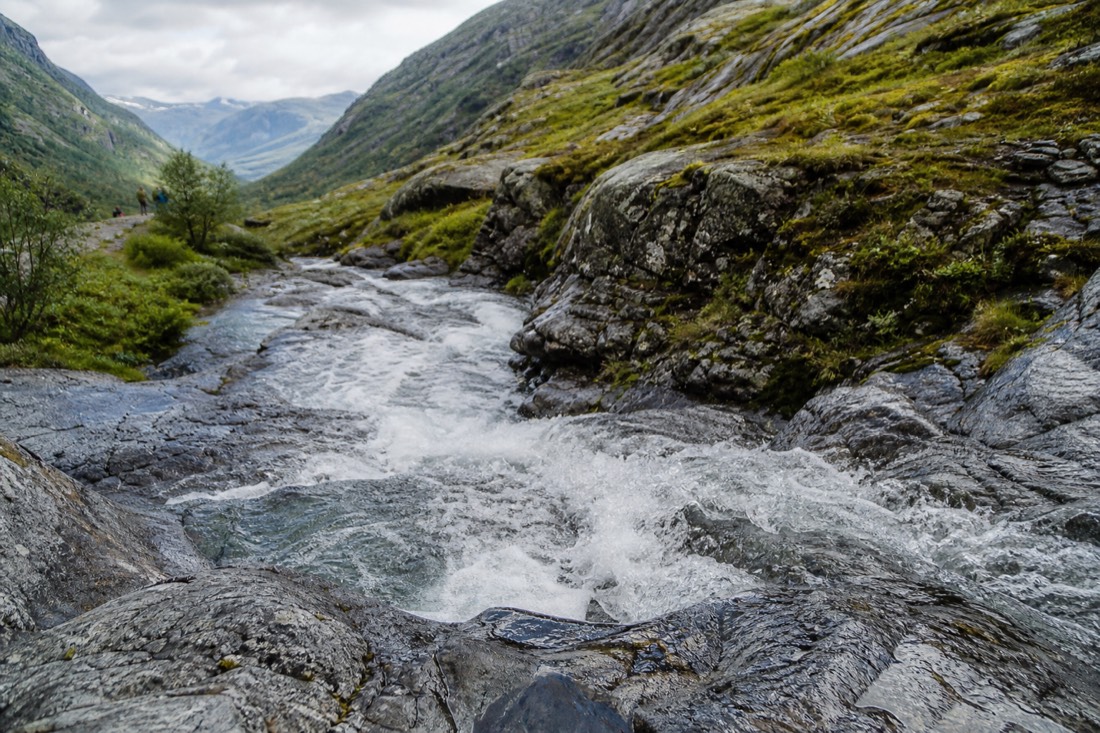
The supply is mostly surface water from lakes and reservoirs, treated lightly because it starts clean. Taste varies slightly by region, and it is the kind of variation you notice only if you are looking for it. Hotel bathrooms, café taps and public refill points are all the same water.
The one nuance concerns streams. Water running off a glacier or through a grazing area is not the same as mains supply, and hikers who drink from streams are making a judgement call rather than following official advice. On the marked trails around Preikestolen and Trolltunga, carry what you need from the trailhead. Our hiking difficulty guide covers how much that actually means in litres.
| Source | Safe to drink | Note |
|---|---|---|
| Hotel and café taps | Yes | Standard mains supply nationwide |
| Public fountains and refill points | Yes | Common in Oslo, Bergen, Tromsø |
| Mountain hut taps on mains | Yes | Signposted if untreated |
| Open streams and rivers | Judgement call | Not official advice, varies by catchment |
| Bottled water | Yes | Costs many times the tap alternative |
Does Apple Pay Work Everywhere In Norway?
Effectively yes. Contactless cards, Apple Pay and Google Pay are accepted at almost every till, kiosk, bus and museum in the country, while some merchants use Vipps, which may not be available to a visitor. Terminals are modern, tap limits are high, and it is normal to spend a week without touching a note.
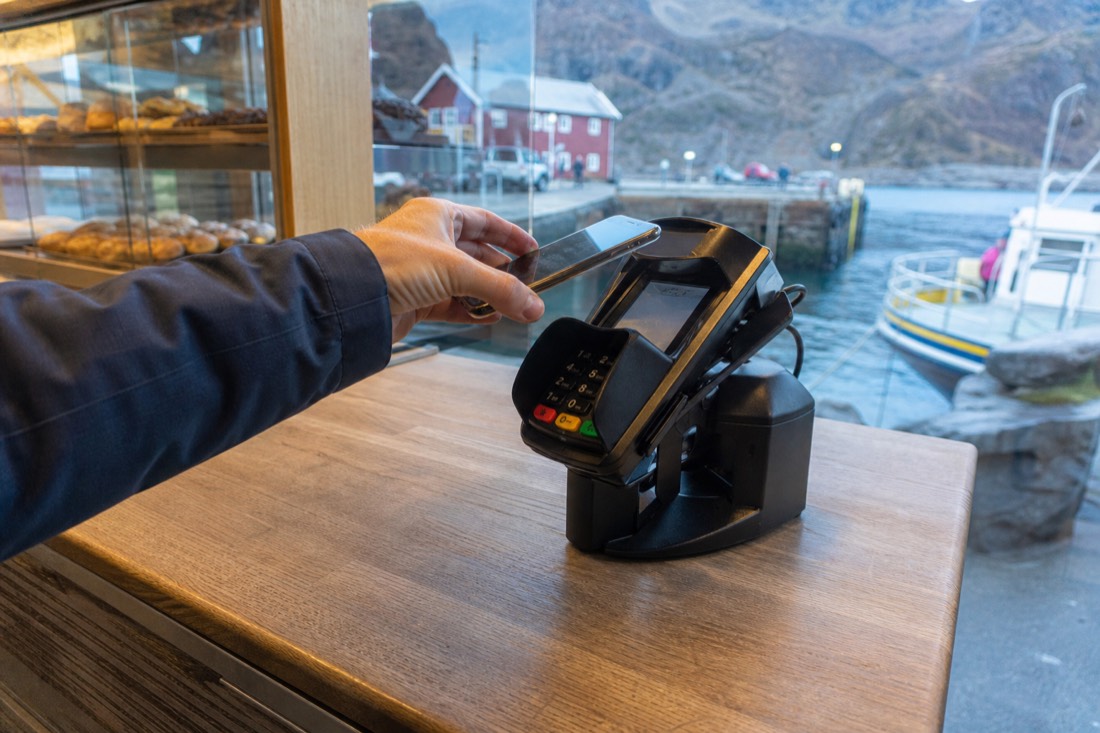
Norway is further down the cashless road than almost anywhere in Europe, and the payments market reflects it. The cards and payments sector was valued at roughly USD 8.68 billion in 2025, which is a large number for a country of five and a half million people because so much of daily life runs through it.
Where visitors occasionally hit friction is at the margins: an unmanned parking machine that wants a chip and PIN rather than a tap, a rural fuel pump, a market stall on a Saturday. Carry one physical card alongside your phone as the backstop, and set a PIN on it before you fly.
| Situation | Card | Apple or Google Pay | Cash |
|---|---|---|---|
| Restaurants and cafés | Common; confirm with the merchant | Common; confirm with the merchant | Accepted, unusual |
| City buses and metro | Yes, or app | Yes | Often not accepted |
| Museums and attractions | Common; confirm with the merchant | Common; confirm with the merchant | Sometimes refused |
| Tour operator on-site payment | Common; confirm with the merchant | Common; confirm with the merchant | Rarely needed |
| Rural fuel pumps | Chip and PIN | Usually | No |
| Small market stalls | Usually | Usually | Occasionally only Vipps |
Vipps is worth knowing about even if you cannot use it. It is tied to a Norwegian bank account, so visitors generally cannot register, and a Vipps-only vendor may have no usable alternative; ask before buying.
Do You Need Any Norwegian Cash At All?
Almost certainly not. Cash accounts for only around 3 percent of consumer transactions in Norway, and many businesses no longer keep a float. If you want a safety net, take a small amount of kroner and expect to bring most of it home unspent.
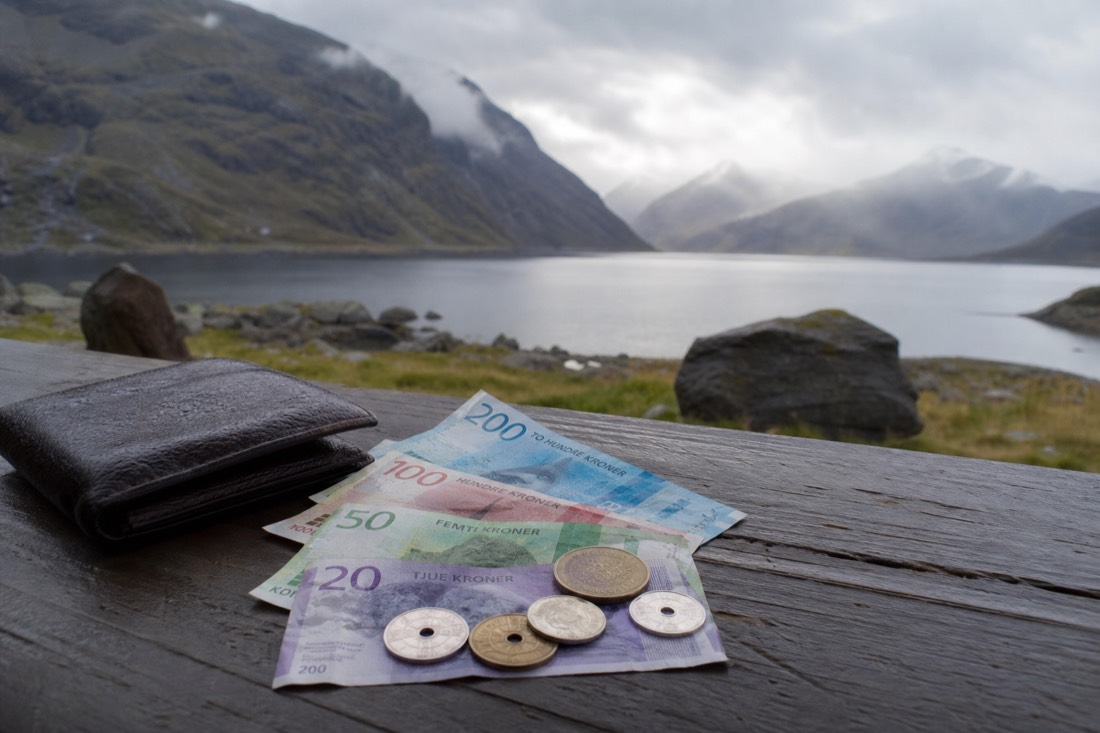
That 3 percent figure is the one to hold on to, because it explains why cash advice from a decade-old guidebook is now misleading. Bank branches that handle notes have thinned out, and ATMs are less common on the street than most visitors expect.
The currency is the Norwegian krone, NOK, and Norway is not in the eurozone. Euros are not generally accepted, and the few places that take them will use a rate you would not choose.
If you do withdraw, decline dynamic currency conversion. When an ATM or terminal offers to charge you in your home currency, it is quoting its own exchange rate rather than your bank's, and the difference is real money over a trip. Always pick kroner.
| Option | When it makes sense | Watch for |
|---|---|---|
| Home debit or credit card, tap | Default for everything | Foreign transaction fees on some cards |
| Multi-currency travel card | Frequent travellers | Weekend exchange spreads |
| ATM withdrawal in NOK | Small emergency float | Decline dynamic currency conversion |
| Airport exchange desk | Rarely | Poorest rates available |
| Euros in cash | Not accepted | Not a fallback in Norway |
Our Norway cost guide breaks down what you will actually be spending on, which matters more than how you pay for it.
How Much Should You Tip In Norway?
Tipping is genuinely optional. Service staff are paid a proper wage, and no one will chase you for a tip. For good restaurant service, round up or add 5 to 10 percent. Fifteen percent reads as high and is reserved for something exceptional. Taxis, bars and hotels expect nothing.
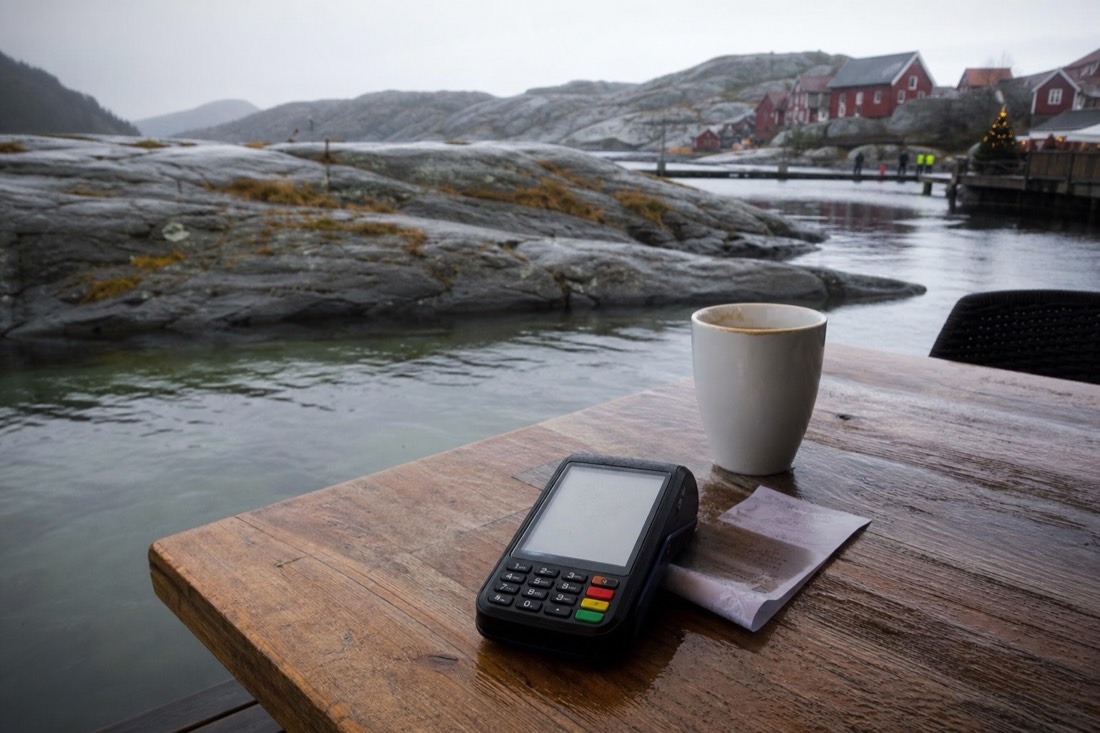
The practice has shifted, though, and it is worth understanding why the prompts on card terminals feel more American than they used to. Norwegians left a record 981 million kroner in tips in 2024, a figure that has grown alongside terminal tip prompts appearing at the point of payment. That does not make tipping obligatory. It does mean you will be asked more often than the traditional advice suggests.
The polite answer when a terminal offers you 10, 15 and 20 percent buttons is to press the skip option without embarrassment, or to enter your own amount. Nobody reacts.
| Service | Norm | Notes |
|---|---|---|
| Restaurant, good service | Round up or 5-10% | Above 15% reads as unusually generous |
| Restaurant, ordinary service | Nothing | Entirely acceptable |
| Bar service | Nothing | Round up if you like |
| Taxi | Round up to the nearest note | Not expected |
| Hotel housekeeping | Nothing | Not part of the culture |
| Tour guide | Nothing expected | Appreciated after a long private day |
Tour operators price this in. On a guided day out, the price you paid on the platform is the price, and guides do not work a tipped model the way they might elsewhere.
What Is The Smartest Way To Handle Money On A Tour Day?
Book the tour in advance on the platform, carry one card and your phone, and take a refillable bottle. Almost everything else on a Norwegian excursion day, including hotel pickup and lunch on some tours, is either included or payable by tap. You will not need a wallet full of notes.
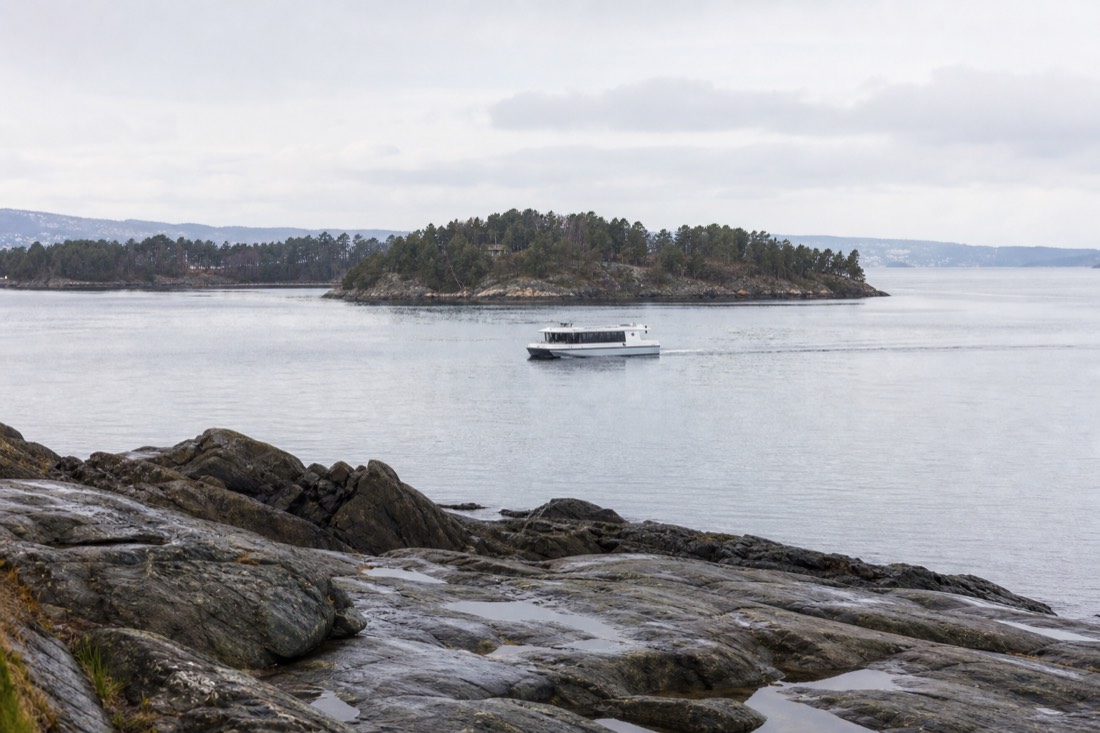
Related planning: boat trips we list, things to do in Oslo.
How Does The Alcohol Monopoly Change What You Spend?
Considerably, and it is the money rule visitors break most often. Supermarkets sell beer only. Wine and spirits come from Vinmonopolet, the state monopoly, which keeps shorter hours than shops and closes early on Saturdays and all day Sunday.
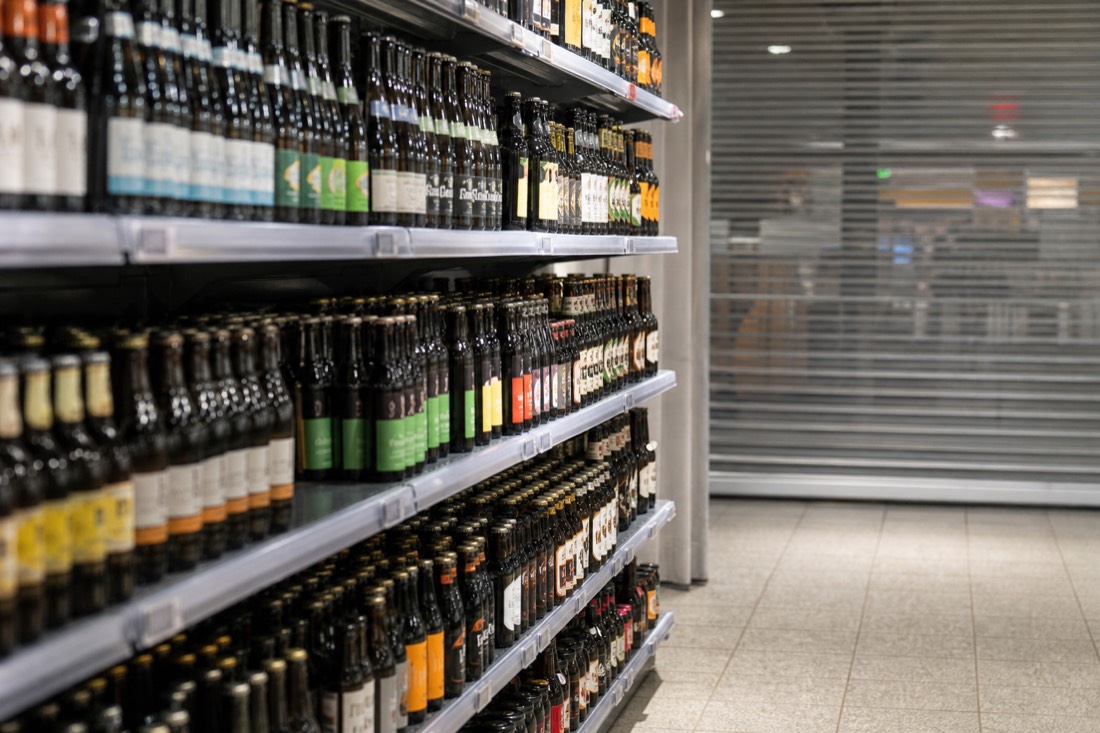
Planning a shop visit into the day you arrive is the simplest fix.
Alcohol is where a Norwegian budget quietly disappears, and buying it in a bar rather than a shop multiplies the cost several times over. The monopoly is not an inconvenience so much as a scheduling problem: it is easy to plan around and easy to forget.
| Where | What you can buy | Note |
|---|---|---|
| Supermarkets | Beer only | Sales stop at fixed times daily |
| Vinmonopolet | Wine and spirits | Shorter hours; closed Sundays |
| Bars and restaurants | Everything | The most expensive route by far |
| Duty free on arrival | Within quota | Genuinely worth using |
| Small villages | Often no Vinmonopolet at all | Buy before you travel out |
It is also the one place where arrival timing matters. The duty-free shop sits after baggage reclaim on arrival at Norwegian airports, which is deliberate: you are meant to buy on the way in rather than on the way out, and travellers who walk past it are usually surprised to learn there is no equivalent option in town.
The duty-free row is the one locals actually rely on. Buying your quota on arrival is standard practice here rather than a tourist trick, and it is the single largest saving available on this line of a budget.
Can Visitors Claim Tax Back On Purchases?
Sometimes, on goods taken out of the country, through the tax-free shopping scheme at participating shops. It applies to physical goods above a minimum spend, not to meals, hotels or tours, so it rarely touches a normal travel budget.
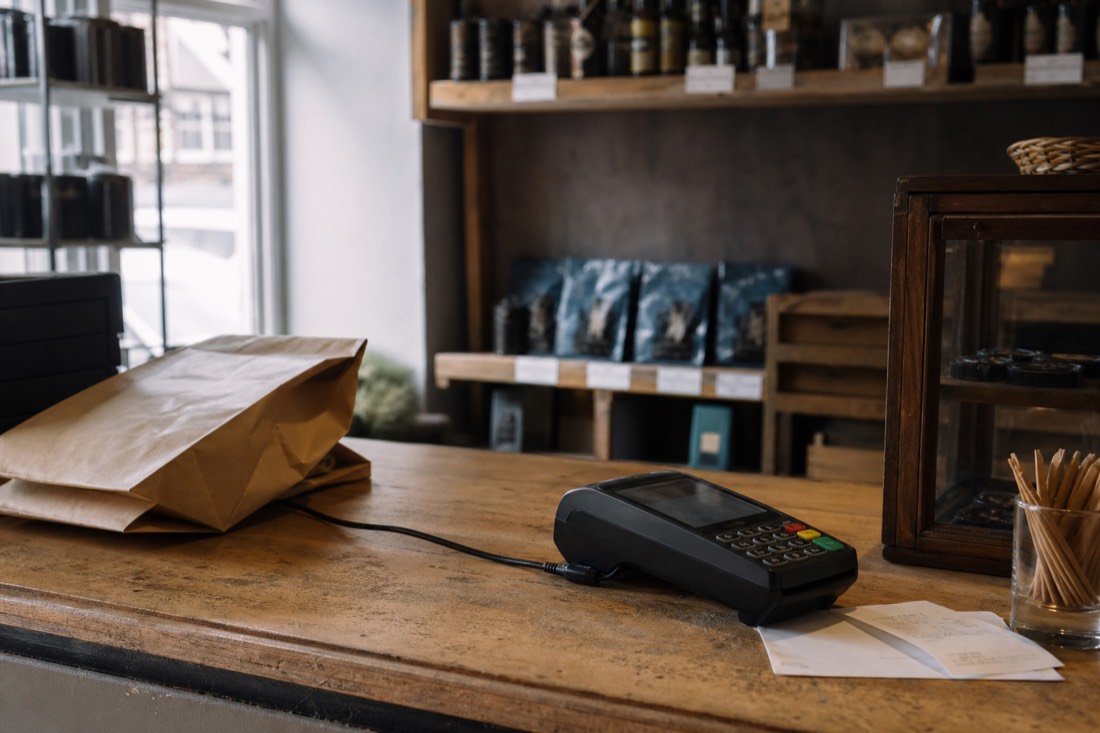
Norway operates a refund scheme for visitors exporting goods, and shops that participate display it. The practical value depends entirely on whether you are buying things to take home rather than simply travelling.
| Spend type | Refundable |
|---|---|
| Clothing, gifts, equipment above the minimum | Usually, at participating shops |
| Restaurant meals | No |
| Hotel nights | No |
| Tours and tickets | No |
| Fuel and transport | No |
Ask at the till before paying, since the paperwork has to be issued at the point of sale, and keep the goods available for inspection when you leave. For most travellers this is worth a few minutes only if they have bought something substantial.
Which Card Should You Actually Use In Norway?
One with no foreign transaction fee, and always pay in kroner. Norway is close to cashless and cards work everywhere, so the only real cost is the fee your own bank adds and the poor rate offered by dynamic currency conversion at the terminal.
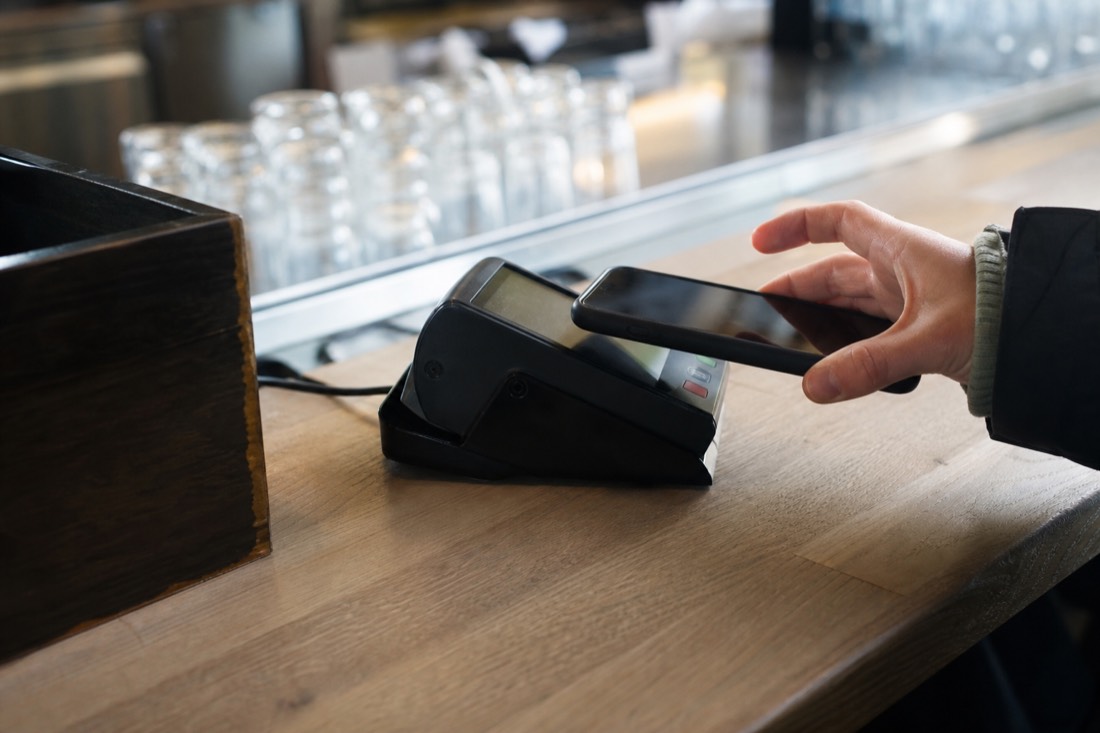
Because cards work so universally here, payment choices compound over a trip: every purchase carries whatever margin your card and the terminal add. Getting this right once at home is worth more than any amount of on-the-ground economising.
| Choice | Effect |
|---|---|
| Card with no foreign transaction fee | The single biggest saving |
| Paying in NOK, not your home currency | Avoids a poor terminal exchange rate |
| Accepting the terminal's currency conversion | Costs you a few percent every time |
| Carrying cash as backup | Rarely needed; not harmful |
| Airport currency exchange | Poor rate plus a fee; skip it |
Cash machines will make the same offer, and the answer there is the same: always take kroner.
The middle row is the one that catches almost everyone. When a terminal offers to charge you in dollars or pounds, decline and choose kroner; the conversion it is offering is worse than your bank's.
What Does A Normal Day Of Spending Actually Look Like?
Coffee and a pastry, a supermarket lunch, one sit-down dinner and a ticket or two. The pattern that keeps a Norwegian day affordable is eating one restaurant meal rather than three, and drinking tap water rather than buying anything bottled.
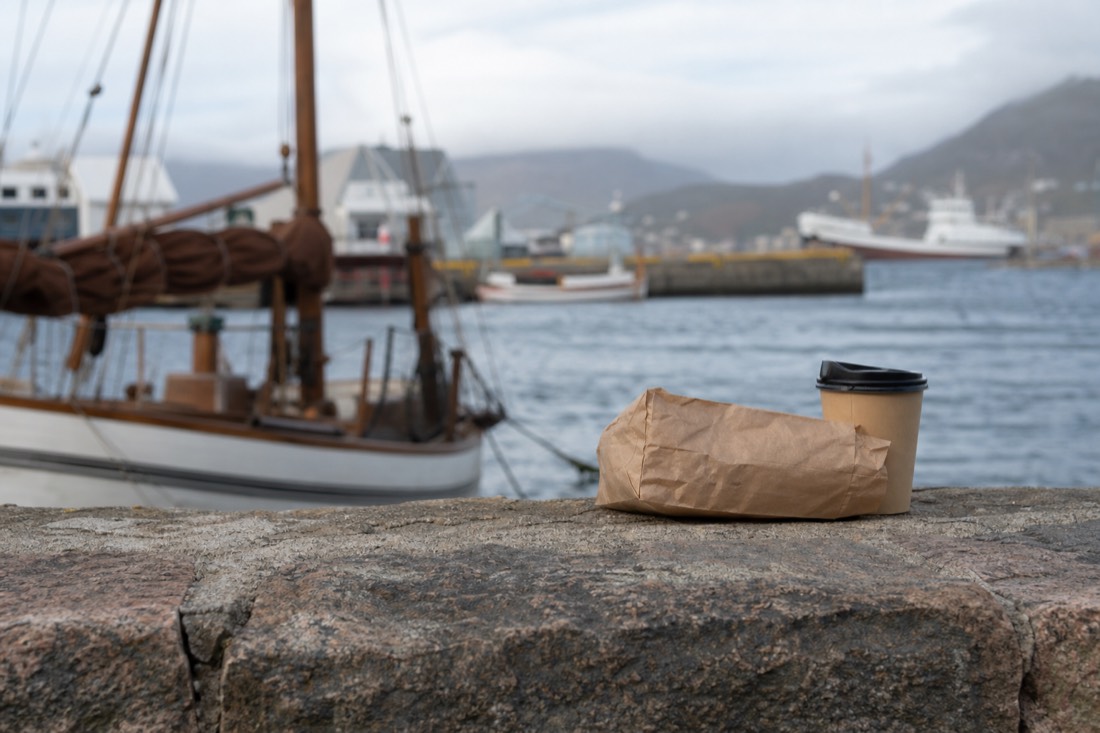
The figures move with your choices far more than with the exchange rate, which is why habits are the useful thing to look at rather than a single daily number.
Abstract daily budgets are hard to act on. It is more useful to look at where the money goes across an ordinary day, because two or three habits account for most of the difference between an expensive trip and a reasonable one.
| Moment in the day | The expensive version | The normal-here version |
|---|---|---|
| Morning | Hotel breakfast add-on | Bakery coffee and a skillingsbolle |
| Midday | Restaurant lunch | Supermarket sandwich and fruit |
| Afternoon | Bottled water and snacks | Refilled bottle; tap water is excellent |
| Evening | Restaurant meal and bar drinks | One restaurant meal; drinks from Vinmonopolet |
| Transport | Taxis between sights | Trams, buses and walking |
| Activities | Several paid tickets daily | One signature activity, alternated with free days |
Breakfast is the other quiet drain, since hotel breakfast add-ons are priced well above what a bakery charges for something better.
The evening row carries the largest single swing. Bar drinks in Norway are expensive enough that shifting them to a shop purchase changes the shape of a daily budget more than any other decision on this list.
None of this requires eating badly. Norwegian supermarkets are well stocked, the bakeries are genuinely good, and a picnic on a harbour wall is what residents do rather than a compromise visitors settle for.
How Do You Split A Bill Or Pay As A Group?
Individually, and it is entirely normal. Norwegian restaurants routinely take separate cards for a table, splitting is expected rather than grudged, and the culture around money is direct: people pay their own share without ceremony.
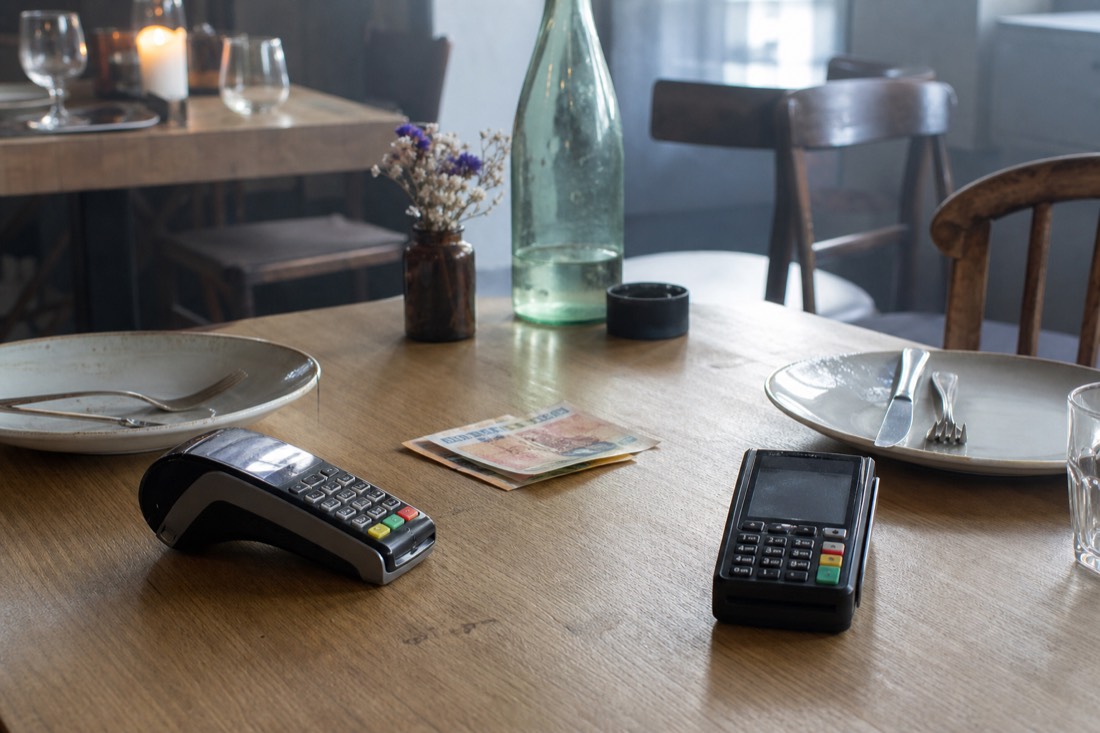
Waiters will ask how you want to split before processing anything, which removes the awkward negotiation entirely.
Visitors from cultures where one person pays and settles up later often expect friction here and find none. Splitting is the default social assumption, and the payment systems are built around it.
| Situation | How it works here |
|---|---|
| Restaurant table | Separate cards accepted as standard |
| Bar rounds | Less common than in the UK or Ireland; people buy their own |
| Group tours | Follow the booking’s party-size and payment terms |
| Shared accommodation | Settled between the group, usually by transfer app |
| Tipping on a split bill | Optional, and per person if at all |
| Cash to settle up | Rarely used; almost everyone transfers |
Rounding up is the most common Norwegian behaviour, rather than calculating a percentage. Leaving the coins from the change, or rounding a card payment to the next convenient figure, reads as normal here; a carefully computed twenty percent reads as distinctly foreign.
Tipping stays optional even in a group. Service is included in Norwegian pricing, and 5 to 15 percent for genuinely good service is a choice rather than an expectation, whether one person pays or six do.
The practical upshot is that you never need to carry cash to handle a group meal, which is unusual and worth knowing before anyone visits an ATM on arrival.
Which Everyday Money Assumptions Catch Visitors Out?
The three that recur: assuming bottled water is necessary, assuming you need kroner in cash before you land, and assuming American-style tipping applies. All three cost money and none of them are true. The genuine expense in Norway is accommodation and alcohol, not the small daily transactions.
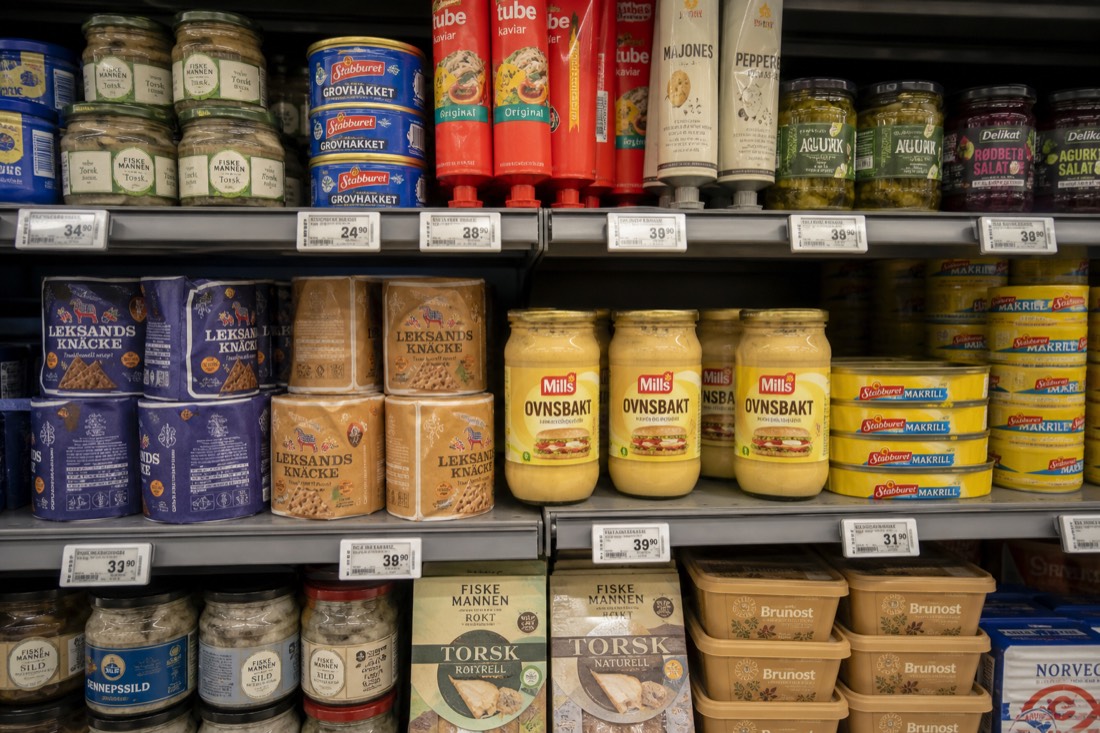
Alcohol is where the sticker shock lands hardest. Beer and wine carry high duties, spirits are sold through the state monopoly rather than supermarkets, and a restaurant round costs what a meal does elsewhere. Self-catering some meals is the standard visitor adjustment, and Norwegian supermarkets are good.
The other adjustment is psychological. Prices look enormous in kroner because the denominations are large, and the mental conversion takes a day or two to become automatic. Visit Norway and Statistics Norway both publish current price levels if you want the official picture rather than an anecdote.
A last practical note for the food side of the trip: knowing what is worth the price makes the budget question easier, and our what to eat in Norway piece covers where the money is well spent. Water, at least, stays free.
Choose Your Norway Experience
Oslo Guided Food Tour with 5 Food Tastings and a Secret Dish. Taste Norwegian bolle, fishcake and other local dishes on a guided Grünerløkka food walk. Have a date in mind? Check it before arranging the rest of your Norway trip.
3 hours. Meet at Olaf Ryes Plass; finish at Kulturkirken Jakob. Three hours on foot. Menu can change. Dietary requests need advance confirmation; wheelchair access is not offered.
Choose a date to see scheduled departures. Final availability and price are confirmed on Viator.
No verified experience fits those requirements. Adjust your choices, or keep the independent plan described above.
Compare Options And Fit Your Plans
General recommendation until you choose. Choose the city where the activity starts, not your arrival airport. Month filters describe the experience’s season, not confirmed departures. Allow travel to the meeting point as well as the listed duration. Confirm your exact option and access needs when booking.
- Food and Culture walk: 3 hours. Explore Bergen’s food and harbour history on a three-hour tasting walk, with tastings described as a small lunch. Three-hour outdoor food and culture walk in Bergen. Confirm the ticket meeting point: the listing description and meeting-point fields differ. Tastings are described as a small lunch; dietary requirements need operator confirmation.