Do Americans Need A Visa For Norway? 2026 Entry Rules
Americans do not need a visa for Norway. Here is how the Schengen 90/180 rule works, where ETIAS stands, what passport validity you need, and what to carry.
 By Lars Hansen, Norway Tour Packages Specialist & Experience Guide

US citizens can normally visit Norway visa-free for a short tourist stay, but the Schengen day count, passport requirements and border checks still matter. The Entry/Exit System is operational; ETIAS is a separate authorisation system scheduled for later in 2026. Check the official requirements again before travel.
Confirm your entry requirements first. Once your route is settled, you can choose a local outing for the time you have.
Booking choice: After reaching Oslo, a two-hour walk with a local guide introduces the city centre from Central Station to the Royal Palace. Explore Central Oslo Walk
Do Americans Need A Visa For Norway?
No. US citizens enter Norway visa-free for tourism and short business trips under the Schengen agreement, for up to 90 days in any rolling 180-day period. A valid passport is essential, and officers may request evidence of your plans, funds and onward travel. Visa-free travel does not guarantee entry.

Norway is not in the European Union, which trips people up, but it is inside the Schengen area. That means the same rules that cover France or Italy cover Norway, and time spent in any Schengen country counts against the same 90-day allowance. Routine internal immigration checks normally do not apply, but temporary checks and carrier identity checks can still occur.
| Question | Answer for US citizens |
|---|---|
| Visa needed for tourism | No |
| Maximum stay | 90 days in any 180-day period |
| Applies across | The whole Schengen area, not Norway alone |
| Advance application | Check requirements for the travel date |
| Fee | None |
| Work or study | Different rules, requires a permit |
The Norwegian Directorate of Immigration is the authority here, and UDI publishes the current requirements in English if your situation is anything other than a straightforward holiday.
How Does The Schengen 90/180 Rule Actually Work?
It is a rolling window, not a calendar year. On any given day, count backwards 180 days and add up every day you spent in the Schengen area. That total must stay at or below 90. Days re-enter your allowance as they drop out the back of the window.

Most travellers never come close. A two-week fjord trip uses 14 of your 90 days and the rest is theoretical. It matters if you are combining Norway with a longer European tour, or returning within a few months of an earlier trip.
| Scenario | Days used | Still available |
|---|---|---|
| 10-day Norway trip in March | 10 | 80 within that rolling window |
| Same traveller, 3 weeks in Italy in May | 21 more | 59, since March still sits inside 180 days |
| Same traveller returning in October | 0 carried from March | March days have rolled out of the window |
| Back-to-back 60-day and 45-day trips | 105 | Over the limit, not permitted |
Entry and exit days both count as full days, which is the detail that catches people planning right up to the line. If your itinerary approaches 80 days, do the arithmetic properly rather than estimating.
Is ETIAS Live Yet, And What Will It Change?
Not yet. ETIAS is the planned European travel authorisation for visa-exempt visitors, expected in late 2026, and it is not operational as of 15 September 2026. When it launches it will be an online application tied to your passport, not a visa, and approval is expected to be quick for most applicants.

The single most useful thing to know is that no third-party website can sell you an ETIAS today, because there is nothing to sell. The official source is the European Union's ETIAS information site, and anything charging a service fee for an authorisation that has not launched is a scam or, at best, a placeholder.
| System | Status | What it is | Applies to Norway |
|---|---|---|---|
| Schengen visa | Live | Full visa for non-exempt nationalities | Yes, not needed by US citizens |
| Visa-free entry | Live | 90 days in 180 for US passport holders | Yes |
| ETIAS | Planned, expected late 2026 | Online pre-travel authorisation, not a visa | Yes, once operational |
| Entry/Exit System | Fully operational since 10 April 2026 | Biometric border registration replacing stamps | Yes, at Schengen borders |
Check the official ETIAS launch and transition guidance before your travel date; do not assume that booking before launch removes a later requirement.
How Much Passport Validity Do You Need?
Your passport must be issued within the last 10 years and valid for at least three months beyond your planned departure from the Schengen area. Check your airline and transit-country requirements as well; do not confuse a precautionary six-month buffer with Norway’s stated minimum.
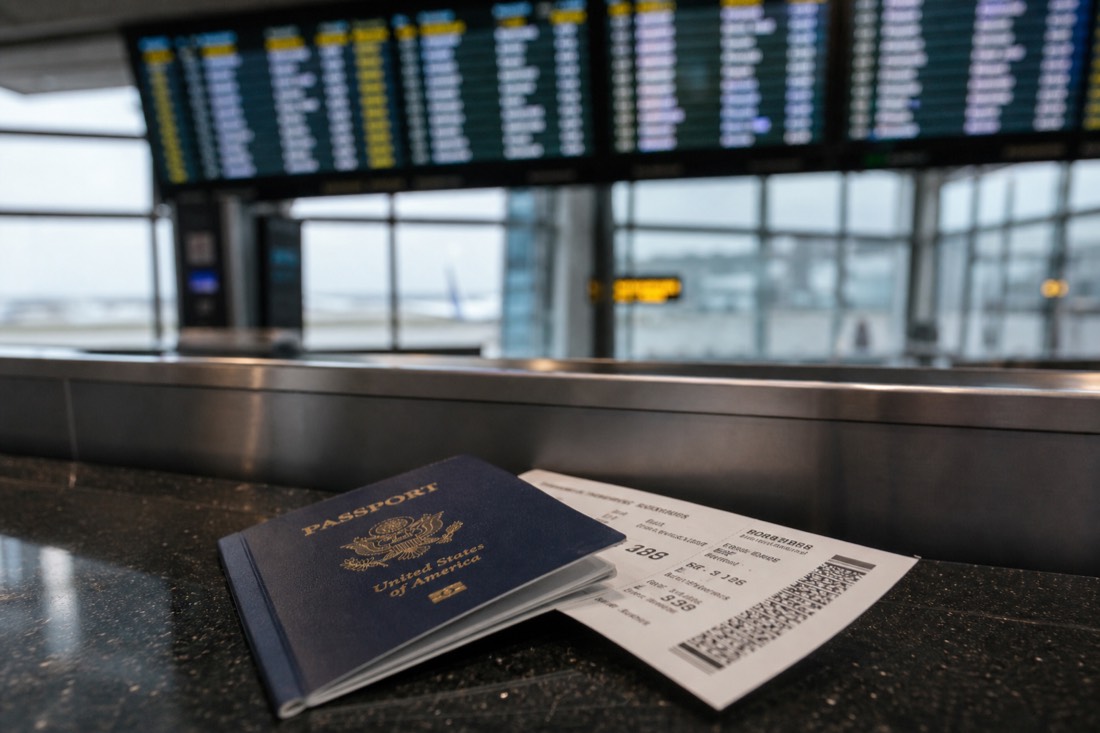
The 10-year issue rule catches renewals that carried extra months forward from an old book. If your passport was issued more than a decade before your travel date, it can be refused even when the expiry date looks fine. Check the issue date, not just the expiry.

What Should You Actually Carry To The Border?
A valid passport, a return or onward ticket, and something showing where you are staying. Norwegian officers rarely ask for more on a tourist arrival, but proof of accommodation and sufficient funds are standard Schengen entry conditions and they are entitled to request them.
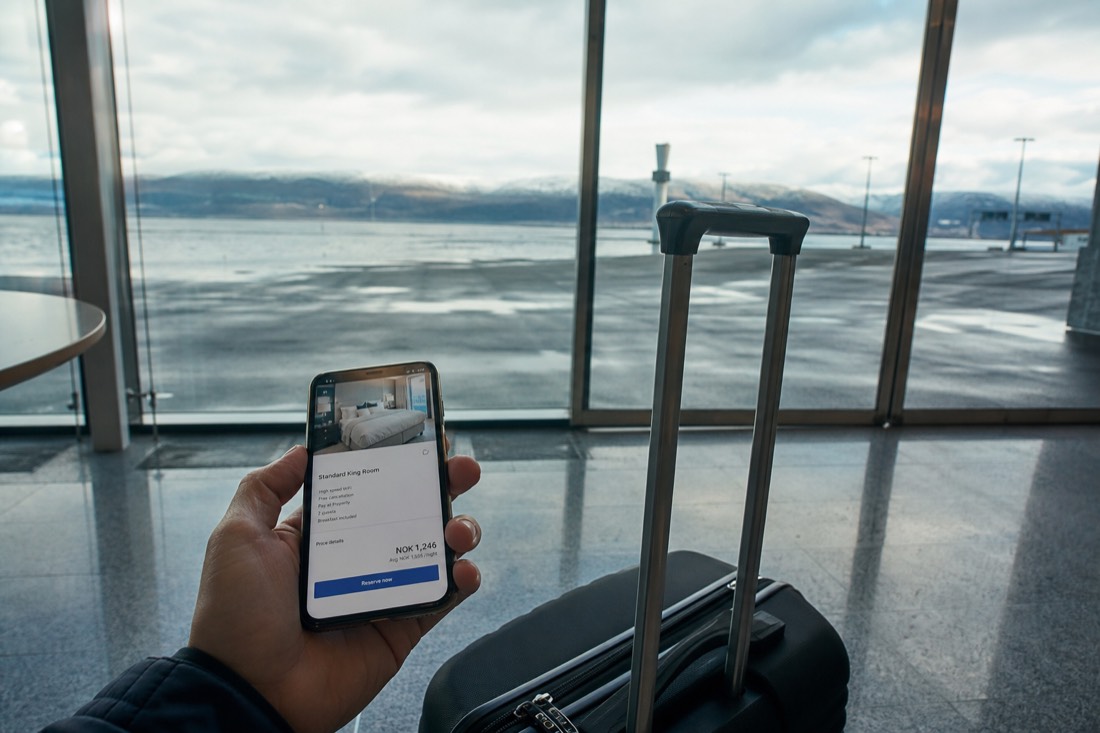
Carry accessible evidence of your bookings and any required documents; follow the authorities’ instructions about acceptable formats. Keep the hotel confirmation and your return flight where you can find them without wifi.
| Document | Needed | Why |
|---|---|---|
| US passport | Always | Issued within 10 years, valid 3 months past departure |
| Return or onward ticket | Usually asked, sometimes checked | Demonstrates you intend to leave inside 90 days |
| Accommodation details | Occasionally asked | Standard Schengen entry condition |
| Proof of funds | Rarely asked | Officers may request evidence you can support the stay |
| Travel insurance | Not required for visa-free entry | Strongly advisable given Norwegian medical costs |
| ETIAS authorisation | Not yet | The system is not operational |
Related planning: multi-day itineraries.
Can You Drive In Norway On A US License?
Yes. A US driving licence is valid for tourists in Norway for up to three months, with no international permit needed. Winter conditions are the real constraint: mountain roads close, tyres matter, and rental agreements set their own rules about where you can take the car.

Seasonality decides more of a driving itinerary than the licence does. Trollstigen, the best-known example, is a seasonal road: it opened on 29 April 2026 and remains subject to seasonal and temporary closures depending on weather, with temporary closures still possible. Plan a mountain route around opening dates, not around distances. Our Norway road trip guide covers which passes gate the classic loops.
What Happens If You Overstay The 90 Days?
It is treated seriously across the whole Schengen area, not just Norway. Consequences range from a fine to an entry ban recorded against you, and the day count follows you into every other Schengen country inside the same 180-day window.

The count is per traveller and per entry into the whole area, not per country visited.
The 90/180 allowance is generous enough that most holidaymakers never approach it, but it catches people combining a long European trip with repeat visits. The rule is rolling rather than annual, which is the part that trips travellers up.
| Situation | How it is treated |
|---|---|
| A short accidental overstay | Fine and a record; some discretion applies |
| A longer overstay | Entry ban across the Schengen area |
| Leaving via a different country | The count is shared; it does not reset |
| Repeat visits inside 180 days | Days accumulate across all trips |
| Unsure of your count | Check before booking, not at the airport |
If your travel over the previous six months has been complicated, count the days before you fly rather than at the border. The calculation is rolling and easy to get wrong by a few days in the wrong direction.
Do You Need Travel Insurance Or Proof Of Funds?
Insurance is not formally required for US citizens on a short visit, but border officers can ask for evidence you can support yourself and intend to leave. In practice this is rare on arrival from the US, and a return ticket plus a booking usually settles it.

In practice, arriving from the United States on a return ticket with a hotel booking, questions rarely go beyond the purpose and length of your visit. The conditions below exist and are occasionally applied rather than routinely tested.
Norway applies the standard Schengen entry conditions, which include being able to show sufficient means and an onward plan. Enforcement for American tourists arriving on a return ticket is light, but the conditions exist and can be applied.
| What can be asked for | How likely | What satisfies it |
|---|---|---|
| Return or onward ticket | Occasionally | The booking on your phone |
| Accommodation booking | Occasionally | A hotel confirmation |
| Means of support | Rarely | A card and a plausible plan |
| Travel insurance | Rarely for US visitors | Policy details if asked |
| Purpose of visit | Commonly, informally | A straight answer |
One document is worth having regardless of any requirement: a copy of your passport stored somewhere other than your passport. A photograph on your phone and a copy in your email covers the realistic scenario, which is not a border refusal but a lost or stolen document in a country where replacing it means a trip to an embassy in Oslo.
Insurance is worth carrying for reasons that have nothing to do with the border. Norwegian healthcare is excellent and not free to visitors, and the real financial risk on this trip is an activity injury or an evacuation from somewhere remote.
How Does Svalbard Differ From The Mainland For Entry?
Svalbard sits outside the Schengen area and has its own status under the Svalbard Treaty, so time there does not count against your 90 days. The catch is that almost everyone reaches it through mainland Norway, which does involve Schengen entry.

This is one of the genuine oddities of travelling in Norway, and it confuses people who read that Svalbard is visa-free and assume the mainland works the same way. Both statements can be true at once because the two are governed separately.
| Mainland Norway | Svalbard | |
|---|---|---|
| Schengen area | Yes | No |
| Counts against 90/180 | Yes | No |
| Entry for US citizens | No visa for short stays | Special treaty status |
| Getting there | Direct international flights | Almost always via the mainland |
| Practical effect | Standard Schengen rules apply | You still transit Schengen to arrive |
The practical takeaway for a normal trip: plan on Schengen rules, because your flights will route through them regardless of Svalbard's separate status.
How Does Entry Work If You Fly Via Another Schengen Country?
You clear immigration at your first Schengen airport, not in Norway. If you route through Amsterdam, Copenhagen or Frankfurt, that is where the external Schengen entry check normally occurs; the 90/180 count includes all your relevant days across the Schengen area, and the Oslo leg is treated as a domestic-style arrival.

It is the same arrangement that applies across the whole area, and Norway is a full participant despite not being an EU member.
This surprises travellers who expect a Norwegian border check and instead walk off the plane in Oslo with no passport control at all. It also matters for connection times, since the immigration queue sits at the first Schengen point rather than the last.
| Routing | Where you clear immigration | Practical effect |
|---|---|---|
| Direct US to Oslo | Oslo | Standard arrival |
| Via Amsterdam or Copenhagen | The transit airport | Allow queue time on the connection |
| Via London | Not Schengen; Oslo clears you | UK transit rules apply separately |
| Via Iceland | Keflavik is Schengen; cleared there | Same as the EU hubs |
| Onward to Svalbard | Mainland Norway first | Svalbard sits outside Schengen |
Passport validity is the other item to check well ahead rather than at the airport. Schengen rules require validity beyond your planned departure and issuance within a set period, and a passport that is technically unexpired can still fail those tests. Renewals are slow enough that discovering this a fortnight out is a genuine problem.
Build a longer connection than you would domestically if your route touches a busy Schengen hub. An hour that would be comfortable on a domestic transfer can be tight once an immigration hall sits in the middle of it.
Automated e-gates are increasingly common at the larger Schengen hubs and may not produce a physical stamp at all, which makes your own record of the dates more useful rather than less.
Entry and exit dates count regardless of whether a physical stamp is issued; keep a record of your travel days. If you travel in and out of the area repeatedly, that paper trail is the simplest way to reconstruct your days if anyone ever asks.
What Changes If You Are Travelling With Children Or A Non-US Passport?
Children need their own passports regardless of age, and the 90/180 rule applies to each traveller individually. A non-US passport holder in the group may need an actual visa, so check each person separately rather than assuming the group travels on the same terms.

Mixed-nationality families are where entry planning goes wrong, because the visa-free arrangement Americans enjoy is not universal. Nothing about travelling together changes an individual's requirements.
| Traveller | What applies |
|---|---|
| US citizen adult | No visa for short stays; 90/180 applies |
| US citizen child | Own passport required, any age; same rules |
| Dual national | Check each country’s rules for your citizenships and documents |
| Non-US passport in the group | May require a visa; check individually |
| Green card holder, non-US passport | Passport nationality governs, not US residency |
Airlines check this at the gate as well as at the border, and a mismatch between the passport used for booking and the one presented causes delays that have nothing to do with immigration law.
Dual nationals may need different passports for different countries. US citizens must use a US passport to enter and leave the United States; confirm the appropriate documents for your route and give the airline the details it needs.
For a non-US passport holder needing a visa, apply well ahead. Schengen visa processing is not fast in peak season, and it is applied for through the country where you will spend the most time, which for this trip means Norway.
Is Norway Straightforward For Americans Once You Are In?
Unusually so. English is spoken almost universally, cards and Apple Pay work nearly everywhere, tap water is excellent, and tipping is optional rather than expected. The friction is cost rather than bureaucracy, and the country runs on systems that assume you have a phone.

Cash is close to obsolete. You can travel for two weeks without touching a banknote, and several operators no longer accept one. Bottled water is money wasted given the tap supply, and the tipping culture is genuinely relaxed, which surprises Americans more than anything else on arrival. We cover the small daily mechanics in our note on tap water, cards and tipping.
What does bite is price. Restaurants, alcohol and tours cost more than most US travellers expect, and the savings come from planning rather than haggling. Our Norway trip cost breakdown lays out where the money actually goes, and Visit Norway keeps practical country information current if you want to check a detail before you fly.
Entry-system update checked on 15 September 2026: the European Commission explains EES and ETIAS.
Choose Your Norway Experience
Central Oslo Guided Walking Tour with Local Guide. Get oriented in central Oslo on a two-hour walk with an English-speaking local guide. Have a date in mind? Check it before arranging the rest of your Norway trip.
2 hours. Two hours from the tiger statue outside Oslo Central Station to the Royal Palace. Select the English time option. Outdoor walking only; no admission inside buildings. Not recommended for poor cardiovascular health.
Choose a date to see scheduled departures. Final availability and price are confirmed on Viator.
No verified experience fits those requirements. Adjust your choices, or keep the independent plan described above.
Compare Options And Fit Your Plans
General recommendation until you choose. Choose the city where the activity starts, not your arrival airport. Month filters describe the experience’s season, not confirmed departures. Allow travel to the meeting point as well as the listed duration. Confirm your exact option and access needs when booking.
- Guided tour - Viking Village, Nærøyfjord Cruise and Flåm Railway: 10 hours 30 minutes. Join the Nærøyfjord cruise, Flåm Railway and Viking village in one guided day. Round trip from Strandkaien 16, Bergen. Choose the English option. Food and drinks cost extra. This is a day trip, with no hotel night.